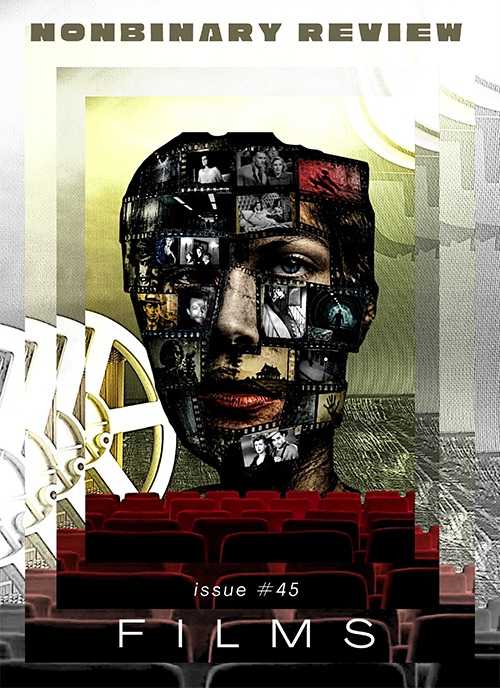
Issue #45: Films
-
The Power of Film
Yasmeen Owens
Film has always transcended entertainment. It’s a visual language of light and shadow, transforming imagination into architecture and stories into experiences that extend beyond the screen. Cinema uniquely contains entire worlds within a single frame, inviting viewers into others’ realities while reflecting their own. This issue examines how film influences us—how a single moment can alter mood, how a character can become a companion, and how the scenes experienced in darkness linger well after the credits roll.
What makes film so lasting is its capacity to develop. Each decade introduces fresh voices, styles, and cultural shifts that redefine what movies can do. Silent films once relied solely on expression and gesture; today’s filmmakers use digital landscapes, immersive sound, and nonlinear narratives to push boundaries. Yet, at its heart, film remains a vessel for human experience—be it a blockbuster or a low-budget indie, each conveys a truth.
This issue honors that truth by exploring behind the scenes—the directors shaping vision, the cinematographers sculpting light, the editors crafting rhythm. We delve into performance artistry—how actors convey emotion through movement, silence, and breath—and investigate film’s cultural impact: how movies mirror society, challenge norms, and ignite conversations beyond the screen.
Cinema also fosters community. Sitting silently in a dark theater with strangers, sharing laughter, or holding your breath in tension is almost sacred. Even in the era of streaming, that shared experience persists as part of cinema’s magic. Watching alone can be intimate, but sharing a film turns it into a collective heartbeat, etched in memory by who was with us, where we sat, and how the room felt at the climax.
Film is equally powerful in solitude—an intimate night, a dim screen, a story meant just for you. Movies become companions, confidants, catalysts, helping us navigate complex emotions and providing language for grief, joy, longing, and change. They remind us that even fantastical stories root in reality: a desire to connect and be understood.
This issue highlights films that have shaped generations and spotlights new creators redefining the art. We explore genres—from Hollywood romances and gritty dramas to experimental surrealism and adrenaline-fueled adventures—each offering a unique way to perceive the world. Together, they form a mosaic of human experience.
We also look ahead at film’s future. Technologies like virtual production, editing, and immersive formats are expanding storytelling possibilities. Yet, as tools develop, the core of filmmaking remains rooted in creativity, collaboration, and daring to imagine anew. The future isn’t just about innovation but about storytellers using these tools to tell meaningful stories.
Film is memory. It’s the movies that shaped our childhood, helped us through heartbreak, or inspired us to dream bigger. It’s the quotes we carry, the scenes we replay, the characters who feel like old friends. Cinema becomes part of personal history, woven into our identity.
As you explore this issue, we invite you to reconnect with your own cinematic journey. Reflect on movies that changed you, made you laugh or cry, or stayed with you long after leaving the theater. Think about filmmakers whose work feels like home and those who challenge your worldview.
Film is an art, a cultural force, a shared experience, and a personal voyage. It’s both escape and confrontation, fantasy and realism. Stories—crafted with purpose—have the power to shift perspectives, spark imagination, and connect us across time and space.
This issue celebrates that power. A tribute to filmmakers daring to dream, audiences willing to feel, and stories shaping our view of the world.
A Perspective on Film from Lead Fiction Editor Aanchal Budhwar
Films have always been an integral part of my life. Growing up, they were something my family did together: weekends at home and trips to the theatre every month (and fighting over popcorn occasionally). I am lucky to have a family that instilled in me a love for films of every kind, from Toy Story to Gravity, Interstellar, Notting Hill, Jojo Rabbit, and The Avengers. The world of films encouraged not just my curiosity but my love for languages too, for the endless, ever-expanding landscape of films made in every language, from every corner of the world. I still remember every film I watched and rewatched a hundred times over on our worn-out sofa, the one that still dips in the middle to accommodate four of us. Films like 12 Angry Men and Life is Beautiful changed the way I saw the world; films like Lady Bird and Gifted changed who I was and made me feel truly seen. Even now, living away from my family in a new city, we discuss movies every weekend with the same fervour as always, and for a moment, I am transported straight back to the living room.
A Word About Film from Publisher Li Quintana
In the 80s, I was dating a pretentious wannabe artist, and we would drink copious amounts of chianti and watch art films. Although I would never have admitted it at the time, I found films like Videodrome, My Dinner With Andre, Koyaanisqatsi, and Wings of Desire more confusing than enjoyable. They were certainly reaction-provoking—so much so that I sometimes had physical responses like hyperventilation, tachycardia, and muscle spasms. Today, I look at movies with a much more critical eye. Am I being manipulated, being encouraged to agree with a position I either don’t understand or that I oppose? Am I being shocked just for the sake of being shocked? Is this even something I’m supposed to understand? Now, 40 years later, I understand myself, my views, and my likes and dislikes much better, so I’m no longer attracted to films that are trying to convince me of things. What I want now isn’t to be convinced, but to be moved. There’s a huge difference.
However you enjoy film, we hope you enjoy this very special issue.
Viviana De Cecco
Film Noir Obsession, cover
Viviana is a writer, translator, visual artist. Her visual art appeared in various magazines.
Lixin Foo
Cinephile’s Guide to MWIFF1000
Lixin is a Singaporean Chinese writer. Her historical flash fictions have been nominated for Best Microfiction, the Pushcart Prize, and longlisted twice for the Ink of Ages Fiction Prize. More of her works can be found in Indie Bites, Space & Time Magazine, and Crepuscular Magazine.

‘Semilore Kilaso
Moving jpegs.
‘Semilore is a researcher in the built environment, a literary editor and human.
Teddy Lance
insert leading man
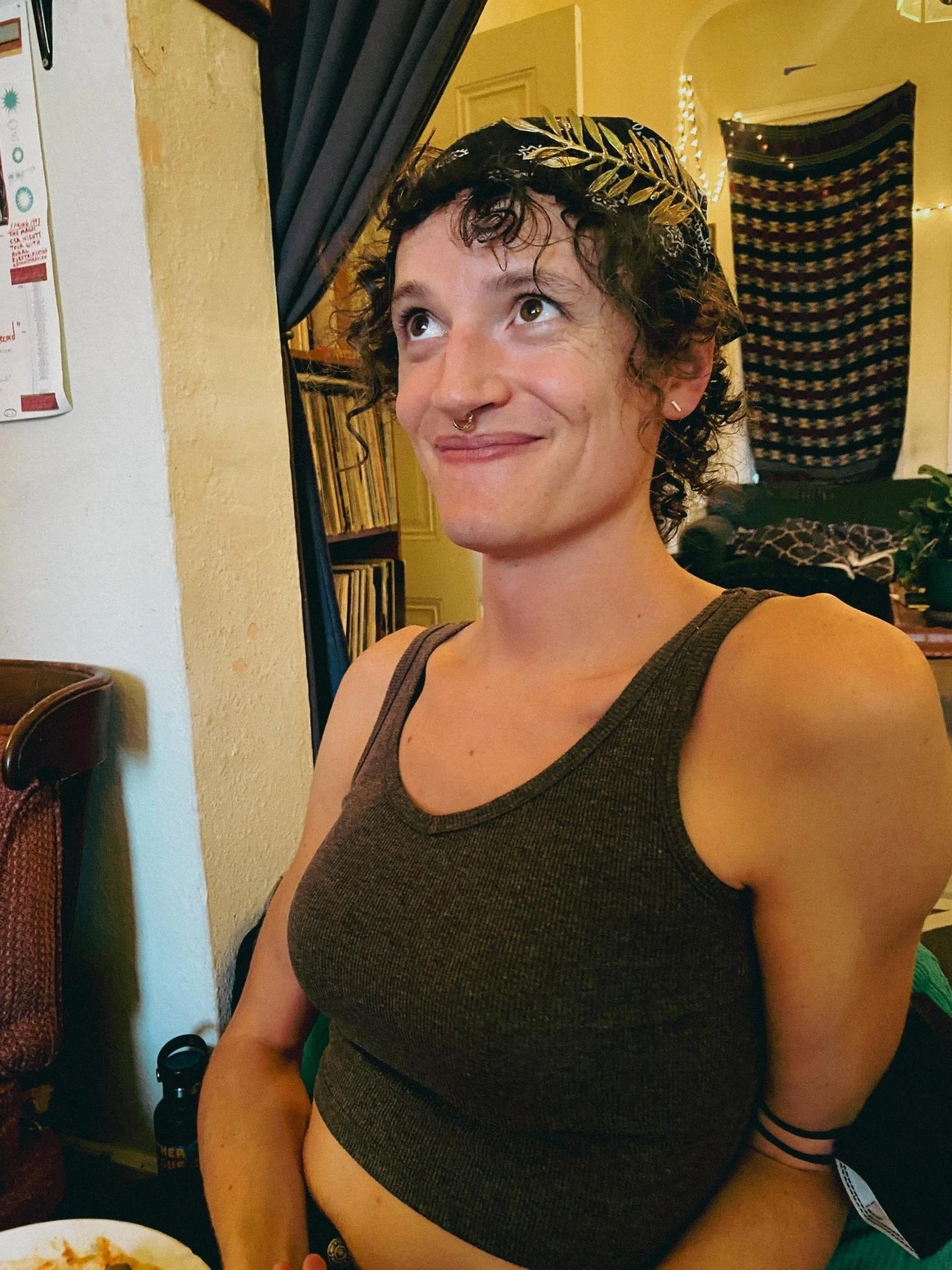
Teddy, or t. persephone, is a white transfemme poet living on unceded Lisjan Ohlone land. Her poetry appears in Shelf Magazine and the haiku journal seashores, as well as through publications she co-organized: Oakland Trans Poetry Workshop’s anthology Distilled Devotion and TurkxTaylor’s 2025 Trans Day of Visibility poetry zine.
A. A. Nour
The Midnight Pavane on Lovers’ Hill
A. A. is a researcher and a writer, and sometimes those two things overlap. She’s an Odyssey Writing Workshop grad, as well as the recipient of the 2023 Baen Fantasy Adventure Award. Her work has appeared in Tales to Terrify, In Another Time, and Andromeda Spaceways.
Lisa J. Roberts
Heart Thud
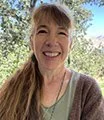
Lisa lives in California with her husband in a home they call “The Empty Nest.” She has been published in Rattle, Saint Austin Review, Trivium Magazine, Society of Classical Poets, and other journals. She believes poetry should capture something real and distill something true, even when it’s fiction.
Griffin Rockwell
The Shape
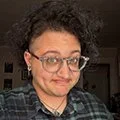
Griffin is a queer poet whose work has appeared in AGNI, Poet Lore, HAD, Whale Road Review, and elsewhere; xe has three chapbooks. Griffin enjoys writing about gender, science, space, and unusual connections. Find their website and socials at https://linktr.ee/griffinrockwell.
Xavier Searle
Two Cookies & a Coke
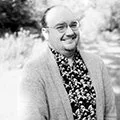
Xavier is a poet and educator. Their work has appeared in or is forthcoming from poets.org, Tales from the Cryptids, Bards Against Hunger, and elsewhere. They are a Poetry Editor at American Poetry Journal and hold an MFA from North Carolina State University.
-
Do you use a pseudonym? Why or why not?
I don’t! I’ve considered it in the past, but I don’t think I would feel right about putting my work—at least not my poetry—under any other name.What is the most confusing thing anyone has said to you about your work?
Upon reading a poem of mine that was about, in short, being surprised by a first kiss & essentially not being able to consent to it, someone in the room remarked with sincerity that it was a “cute, romantic” moment to write a poem about. It was one of many “were we even reading the same poem” moments that I’ve had.What works do you feel have been left out of the western literary canon - works from other countries, in other languages, or by marginalized people?
It’s gaining some renown these days, but my mind instantly goes to Larry Mitchell’s The Faggots & Their Friends Between Revolutions (cue everyone who has met me rolling their eyes in unison). That book totally changed my life in ways that I can scarcely even describe. I move through the world differently, & eventually found my way to being a poet, because of it.A text—or more accurately, a writer—from a different country than my own that I feel like should have vastly more recognition by the thing we call the canon & its disciples is Iranian poet & filmmaker Forugh Farrokhzad. I think of her selected poems, Sin, often. There’s richness of intention & attention that feels dutifully paid by Sholeh Wolpé’s translation, & that my copy of this book was lent out & never returned to me is a deep upset in this, every, season. Each day, I reach for Farrokhzad, & each day she is still in her period of absence from my shelf.
What writers/artists/filmmakers/musicians have influenced your work - either the work itself, or the way in which you work?
These days, I’m always returning to David Lynch. The way he makes around, through, toward trauma is astonishing. New faces of despair & love reveal themselves every time you revisit one of his works, & I find the depths that his often twisting worlds subtly (or not-so subtly) reach are vital.I’ve spent a lot of time lately with a lot of the art I lived in when I was a musician: Clifford Brown, Thelonious Monk, Cecile McLorin Salvant, Chet Baker, my personal holy trinity of vocalists: Billie Holiday, Nina Simone, Ella Fitzgerald. Somewhere within me, these artist & uncounted more are always present.
Writers I’ve come to understand the world & myself by, which I’m almost hesitant to touch because there are so many I’m bound to forget, include the late & luminescent June Jordan, alongside Essex Hemphill, torrin a. greathouse, Donika Kelly, Frank O’Hara, Laura Hershey, Ai, Paul Tran, Lorna Dee Cervantes, & so many others I feel as though I’ve run out of room to list. Poetry is how I make sense of the world, & as such my poetic lineage is vast & ever-growing. I’m really lucky.
Is there one part of your creation process that’s harder for you?
It’s gotta be titles. None of it is necessarily easy, but I love drafting & I am in love with revision, but something about titles always trips me up. If I get the title before the language of the poem itself, then I’m set for a while. But if I get the poem out without it having a title? Woof, help me, because I’m going to be sitting there staring at that poem for an eternity trying to name it. Names, as it were, have power.How do you handle rejection? Do you have any advice for other creators about handling rejection?
For the most part, I handle rejection well. Of course, the third high-stakes rejection in a week will sting, or that of something that my soul is drawn toward with an almost cosmic feeling of “rightness.” But those rejections are always going to be part of this. I submit & publish my work largely because it’s necessitated by the life I’m trying to build. Having poems in the world is cool, but it isn’t—& can’t be, in my opinion—the reason to make.Generally speaking, the worst a publication can do is pass on your work that time around. Editing is more than arbitrary acceptances & rejections: if your work doesn’t fit this time, it might fit elsewhere, or other work might have a better shot next time. I have a couple “white whale” journals, one of whom I’ve got seven rejections from. It’s just how it works when these publications have a limited number of poems they can or will run in any given issue. If you’re worried about rejection or are otherwise learning to navigate it in a healthy way for your creative practice, my biggest piece of advice is only submit to places that don’t have a reading fee until you can solidly maneuver your relationship to rejections. It’s the worst feeling to pay for a submission & then either know it wasn’t your best showing or get a wholly unexpected rejection. Maybe that’s part of it, too: if you’re expecting the odds to be against your work, regardless of your pride in it or its quality by whatever metrics you use to dictate the quality of poetry, then every acceptance is cause for cheering & every rejection is proof that you’re out here doing the thing, living the life.
Do you have a piece that you created early in your career that makes you cringe? Will you ever go back and fix it so it can be submitted somewhere?
Oh, constantly. I was writing poems without any kind of personal framework for doing so, & so many of those poems are bad. Most poems have parts that can be repurposed or otherwise transmuted into something better. As a revision lover, I’m always willing to crack open an old notebook. I’m definitely someone who believes that to be cringe is to be free, though, so even something like my fist two publications having typos in them doesn’t keep my up at night.What is your biggest creative doubt?
That my poems are bad & nobody’s being straight up about it. Sure, some (read: many) of them are bad, but I even mean the stuff that was in my MFA thesis, the stuff that gets good reactions at readings, etc. I came to poems from a high-anxiety field where until you reach the highest level possible you’re generally expected to feel as though you aren’t enough & that your work is sub-par. I’m still trying to shake that, & sometimes I’m worried that I’ll never be able to.What piece of creative advice have you received that sounded good, but was ultimately not useful to you?
Who could even say! Most advice doesn’t work out, but is fun to try. I’m thinking a lot lately about advice I got when I was not yet a poet, but that helped lead me to it. “If there’s anything else you could do [other than, at the time, music] & be remotely happy with, then do that instead.” I’m only barely paraphrasing, & it was important to me as a 19, 20, 21-year-old who was going through a massive shift away from music as a profession due to a muscle injury. It made me feel less like a failure for not being able to continue down the path I’d been chasing. I don’t know that I necessarily agree with it now, & it certainly isn’t useful for me as I chase poems, but it was a good piece of transitional advice when I was trying to conceptualize what I wanted life to look like.Is there a deep, dark secret you’re carrying? If so, why are you keeping it? (No, we don’t want to know what it is. We love a mystery.)
Depending on who you ask if they were to learn “secrets,” sure. Anything that was once a deep, dark secret seems to wind up in a poem—so at some point, if things go according to plan, a lot of “secrets” are going to come out when eventually I have a debut. I love a mystery, but don’t find too many secrets to be productive. The deeper the shame, the more it’ll erode.

J. J. Steinfeld
Old Sci-Fi Films
J. J. has published 25 books, including An Unauthorized Biography of Being, A Visit to the Kafka Café, Gregor Samsa Was Never in The Beatles, Acting on the Island, As You Continue to Wait, and My Post-Holocaust Second Generation Voice: History-Memory-Identity.
“Old Sci-Fi Films” was previous published in Somewhat Absurd, Somehow Existential (Guernica Editions, 2021).
Ugwu Kingsley Ikenna
The Unburied Reels
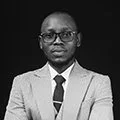
Kingsley is a Nigerian of Igbo descent. Kingsley has a deep passion for literature. His environment has played a significant role in shaping his artistic perspective. He is a contributor on Zoetic press, Spillwords and Eterna journal. For Kingsley, writing is a channel to educate and enlighten.
Natalie Wong
Bruce Lee in Search of an Ending
Natalie is a writer from Hong Kong. She writes screenplays, fiction, webcomics, and everything else that may have her. She is currently an MFA candidate at the University of Washington-Seattle’s Creative Writing Program.