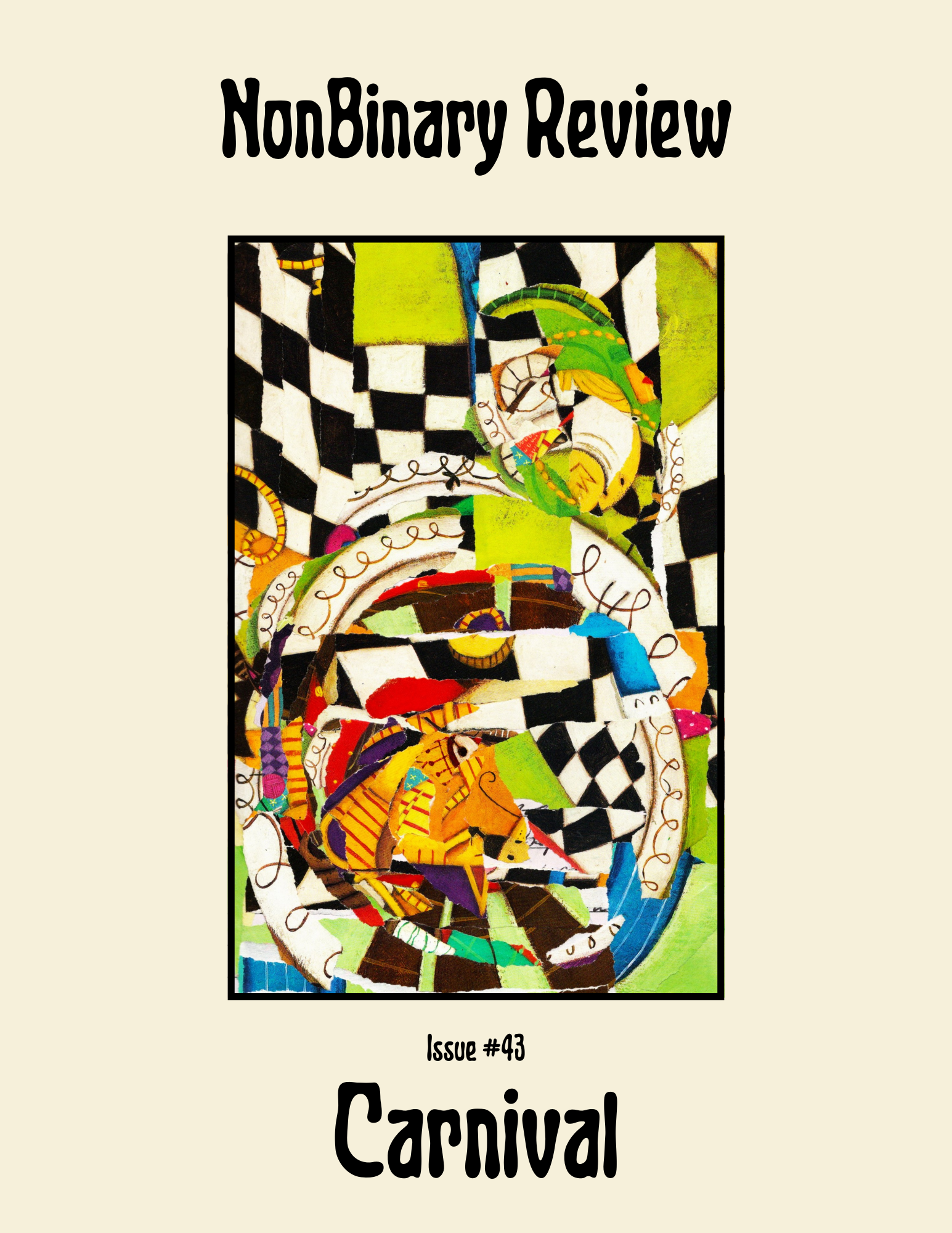
Issue #43: Carnival
-
Carnival Memories
The idea for this issue began with a line from a poem I read a few years ago, “hold a carnival in your body,” by Timothy Ojo. I no longer remember the poem’s title or the full sentence it was part of, but that single line has stayed with me. It returns at the oddest times, especially when life feels heavy and colourless. In those moments, I picture the quiet choreography inside me, the whisper of breath, the steady pulse of the heart, the movement of organs and tissues working without applause. There is a carnival unfolding in our bodies, rhythmic, persistent and full of life. It reminds me that even in stillness there is motion, and even in fatigue there is energy gathering itself for the next step forward.
As we launch our first issue of 2026, I invite you to hold a carnival in your own body. Let this issue offer you colour, music and warmth. Let the poems shift the light a little. Let the stories stretch your imagination. Let the artworks open something new in you or return you to feelings you thought you had left behind.
Semilore Kilaso
Editor in ChiefThe staff of Zoetic Press shares some of their own carnival memories.
Butter Cow
I love to shock my West Coast friends by reminiscing about the Illinois State Fair. It’s a sprawling, vivacious affair that blasts the senses from all angles. The waft of deep fried Oreos mingles indiscriminately with the nostril curling stink of cow patties. Politicians shake hands and nod respectfully at babies. Above their heads, screaming children corkscrew on some metal atrocity that was constructed the day before. Rotating in regal splendor at the heart of it all is a cow made entirely of butter, kept chilled in a glass atrium. Surreal and silly, the state fair must be experienced to be believed.
Kaia Ball (they/them)Penumbra of Joy
Wandering through the bustling grounds of the carnival, a mesmerizing tapestry of lights and glamour surrounded me. The vibrant colors danced across the night, reflecting off the thrilling rides and creating an enchanting glow that seemed to pulse with energy. I held my mom’s hand tightly, feeling the warmth of her grip anchor me as I navigated the lively currents of people swarming around us like a vibrant tide.The air was rich with the sickly sweet scent of cotton candy and caramel popcorn, enticing my senses and sending my taste buds into a delightful frenzy. My mouth watered in anticipation of the glorious meal that awaited me—perhaps a giant corn dog or a funnel cake dusted with powdered sugar. Laughter and cheers filled the air, weaving together in a joyful symphony that pulled my attention in every direction, each sound promising new adventures and memories to be made.
Yasmeen OwensIt Was Self Defense
I remember the first carnival when I got to go on every big ride and try the haunted house for the first time at twelve years old. I was mesmerised by the blinding lights, the deafening screams and laughter, the joy bursting at the seams of the tent as the performers displayed mind-blowing tricks. I remember the laughter my family shared at the mirror maze with all our distorted images around us. After the dizzying happy spell of the thrilling rides, the last part of the carnival was the haunted house. I stuck close to mom and dad with my eyes closed while my brother walked ahead of us, trying to spot the costumed ghosts before they jumped to scare him. I managed to survive it without a heart attack, but I did punch an animated prop out of fright just as we were about to reach the exit. My family didn’t stop laughing the entire way back home.
Aanchal BudhwarThe Rewards of Good Behavior
My parents hate big crowds, but one of my nana’s friends worked for the Minnesota State Fair and got free tickets to a band they liked. I don’t remember much except that my toddler sister looked ridiculous wearing construction-grade earmuffs, my brother just wanted to play catch the whole time, and I learned I have a sensitivity to flashing lights because I kind of, sort of, maybe passed out a little bit while sitting on my dad’s shoulders. I didn’t tell my parents because I didn’t want to go home, just lied and said I’d suddenly dropped backwards to be silly, and they bought us two shaved ices each for behaving well.
Odi Welter (they/she/he)Fourth Grade Heroes
When I was a kid, every grade school had an annual carnival fundraiser. It was mostly traditional carnival games: ring toss, tombola, basketball shoot. Even as a tiny child, I recognized that these games were old, worn, and kinda janky, and yet it was one of the highlights of the school year. Never mind that the people attending that carnival were the same people I saw every single day—my classmates and teachers—it was still a special occasion. The highlight of those carnivals was always the dunk tank. Any kid who could throw a baseball, hit a small target, and land the school principal in a tank of disgusting water was a hero for weeks afterward.
Li Quintana (they/them)Funnel Cake Mistake
Growing up in a smaller town, the fair was the highlight of the summer for most kids in the area. For me, it was one of the only times I would have a bit of freedom (sort of) away from my parents with my friends. We would ride the rides until we felt nauseous then make the mistake of splitting funnel cake. The real highlight, however, was getting as many lemonade shake-ups as we could get before running out of pocket change. I still crave a lemonade shake-up now and then.
Rith ScottStereotypes Destroy Unity
A team-building event, we called it, and crammed ourselves into the carriage of a Ferris Wheel, still nervous and new to one another. We came from many countries and walks of life, brought together to nurture student writing. We bonded over the bird’s-eye view of the fair, its lights too bright to let us see the city beyond it. We walked around afterward, and when we passed by a game booth, I was the one pushed to the front to take the air rifle and shoot at the little tags. Because I’m American and the stereotype was funny. I guess nobody expected me to actually be good at it. And didn’t you all look at me differently, as I took my meaningless plastic prize? And I thought: I’m so tired of stereotypes. Let’s just stay on the Ferris Wheel forever.
Bethany Andrews
Bianca R. Ambrosino
Carousel
Bianca is a former residential program manager and professional clown. She now spends her time writing, raising her children, and reading countless academic papers/ scientific publications (for fun).
Adewuyi Ayodeji
Awon, the Goddess of Love
Ayodeji is a Nigerian and holder of a master’s degree in Literature-in-English. His poems are published in Pensive: A Global Journal of Spirituality and the Arts, The Sextant Review, Open Minds Quarterly, The Liar Collective, Havik and elsewhere.

Kaia Ball
what makes a clown?
Kaia Ball crafts fiction with a scientist’s attention, nonfiction with an artist’s panache, and poetry as a love story to life itself. Their work has been published by Harper One, Electric Literature, New Reader Magazine, & beyond. They edit for Zoetic Press and Chrysalis Magazine.
Bethany Bruno
The Girl Who Breathed Smoke
Bethany is a Floridian author. Her writing has appeared in more than seventy literary journals and magazines, including The Sun, The Huffington Post, The MacGuffin, McSweeney’s, and 3Elements Review. Learn more at www.bethanybrunowriter.com.
-
Do you use a pseudonym? Why or why not?
Yes! Bruno is my maiden name. I use it partly to keep a little space between my personal life and my writing, but also because my dad, who was a Bruno, passed away about ten years ago. Publishing under that name feels like a way to carry him with me, and I know he’d be proud to see it in print.What first motivated you to write/create art?
I have wanted to make art since I was a kid. My mom took me to the library every weekend, so books felt like a second home. By fourth or fifth grade they told me I was reading at a twelfth-grade level. To me that was just normal.In high school I was trying to figure out who I was and what I wanted to say. Books became a lifeline. I realized I wanted to write stories that could help someone else feel understood or less alone. If a reader can find a little peace or relief in something I write, then I feel like I am doing something good.
If you could have any writer/artist, living or dead, as a mentor, who would you choose?
In the last ten years, the writer who’s influenced me the most is Cheryl Strayed, the author of Wild. Her writing is raw and honest, and she doesn’t shy away from the dark parts of life. I love that about her. She turns real experiences into something beautiful on the page. I want to write with that same level of truth. I don’t want to sugarcoat anything. I want readers to feel seen when they read my work.Is there one part of your creation process that’s harder for you?
Revision is definitely the hardest part for me. It is not the actual act of revising. It is the constant second-guessing. Sometimes I really love a line or a moment in a story, and even when I know it does not serve the piece, it feels painful to cut it. I get stuck wondering if I am making the right choice or ruining something that worked. So revision becomes this tug of war between what I love and what the story actually needs.What is your biggest creative doubt?
My biggest creative doubt is whether I truly have something unique to say and whether my writing deserves to reach a wider audience. I think a lot of writers struggle with that feeling. Rejection can really make you question yourself. I am definitely in that place right now. I have spent the past year querying two books and sending them to so many agents, and no one has taken either of them on. It is discouraging. It makes me wonder if I am wasting my time or if I am not good enough. I try to remind myself that most writers go through this, and the only way forward is to keep writing anyway.What piece of creative advice have you received that sounded good but was ultimately not useful to you?
All through college and in every writing group, people kept hammering "show, don’t tell!" and to never use adverbs. For a long time I really believed I had to follow those rules or I was doing it wrong. Now I know that every story needs a mix. Sometimes you do have to tell. And sometimes an adverb is precisely the right word. I wish someone had said that sooner instead of turning it into a hard rule. It took me a while to trust myself and write the way the story actually wants to be written.You’re stranded on a desert island—what three creative tools do you want with you?
A huge college-ruled notebook, a thick ballpoint pen that magically never dies, and a pile of books I have been meaning to read forever. If I am stranded, I am at least going to get some good reading and writing done.
Michael Loren Butkovich
Happy the Clown
Michael is a graduate of the New York Institution of Professional Photography.

Kate Falvey
Beyond the Midway
Kate’s work has been published in many journals and anthologies; in her collection, The Language of Little Girls; and in two chapbooks. She co-founded 2 Bridges Review, published through City Tech/CUNY where she teaches, and is an associate editor for the Bellevue Literary Review.
-
Do you use a pseudonym? Why or why not?
No, but I changed the name that I used to use for academic publications: E. Catherine Falvey. I go by "Kate" but my birth certificate name is "Ellen"—which sounds more like a family name to me since I've been "Kate" for most of my life. As a child, I had the notion of being E. Catherine—but when actually using this name, it seemed rather pretentious. Now, I don't know. It's kind of both soft and formidable to my ear. I fool around with thoughts of changing my name for the next act of my life—to some other variant of Kate or Ellen or Catherine. Maybe I'll be Kat. "Kat Falvey's back in town" sounds so cool and a touch scary.... Nah. I don't have the nerve.What is the most confusing thing anyone has said to you about your work?
That they loved it but were passing on publishing it.What things (snacks, pets, totems) do you like to have near you when you work?
Kat Falvey would say "a bottle of gin." E. Catherine would say "brandy-laced tea." Kate says the dregs of my morning coffee or anything warm or cold depending on the season and how fidgety and distractible I am and what time it is (as in, Oh, I need to make another pot of coffee. I need to steep some ginger tea with honey and lemon right away. I need wine. Or pretzels. Or both.)What writers/artists/filmmakers/musicians have influenced your work—either the work itself, or the way in which you work?
This seems rather too grand a question for the likes of me—a jobbing artist. But some poets I love: Dickinson, Austin Clarke, Gerard Manley Hopkins, Eliot, Yeats. Elizabeth Bishop, James Merrill, Galway Kinnell.. And moving into more recent times, poets Naomi Shihab Nye, Maureen Seaton, Tracy K. Smith.... Too many to name and then there are the innumerable prose writers. I always liked what Faulkner said in an interview with a student who asked him about As I Lay Dying's parallels with Hawthorne's Scarlet Letter: "No, a writer don't have to consciously parallel because he robs and steals from everything he ever wrote or read or saw." While I'm not so sure about the actual aggression of "robbing" and "stealing," there's no question that what we write is influenced by all we've read.Is there one part of your creation process that’s harder for you?
Yes, plotting and actually going somewhere when writing fiction. I have begun 12 novels through the years and don't get beyond a few chapters for most of them. I peter out when I have to do something more than fool around with character, dialogue, and scene-setting. I'm not a very good story-teller, which is galling to me.What kind of artistic legacy do you hope to leave behind?
My daughter is a fine poet. She's also the editor of an incredible journal of feminist horror called Bloodletter. I'd like to think that her growing up with a writer-mom activated her poetry genes.Do you have a piece that you created early in your career that makes you cringe? Will you ever go back and fix it so it can be submitted somewhere?
I recently thought of collecting some wolf-themed poems into a chapbook or something and recalled one I wrote in pre-computer days. I rummaged through the batches of papers stuffed into bins in my basement and came up with page 2 of this poem—written sometime in the 80's I think. These pages were literally pulled from a flood and dried out and preserved as if they were true treasures. It was a tough time and I was manic and desperate about saving what I could. A lot of it wasn't worth saving—but that didn't matter to me; I wrote the stuff and so wanted to be able to read it again some day. And all these years later, I'm both impressed and appalled at some of my earliest work. The cringey ones are those that were prompted by bad break ups with bad boyfriends who i can't even remember now.What is your biggest creative doubt?
That I haven't worked hard enough, especially on prose projects.What piece of creative advice have you received that sounded good, but was ultimately not useful to you?
To write in a journal every day.You’re stranded on a desert island—what three creative tools do you want with you?
If I'm only there for a few weeks, I'd need a few pens, a couple of legal pads, and my glasses. I'd need to see the horizon. And I hope I can have books to read while I'm stranded. Preferably good mysteries that aren't too chilling. It won't be easy being alone on an island in the dark.
Devon E. Hayes
She Who Danced With the God of Smiles
Devon is a master’s degree student specializing in history with a focus on diaspora and cultural development. He is fond of mythos, cultural exchange, poetry, history, and storytelling. His work reflects a love of mythology and memory.
-
Do you use a pseudonym? Why or why not?
I do not, not for any particular reason, just because I do not feel the need to.What is the most confusing thing anyone has said to you about your work?
My creative work? Definitely “I don’t get it? I prefer to have the author handhold me through the story.” Which for me is wild.For my academic work it was “you write too poetically.” Which I did not understand until waaaaaay into my MA.
What things (snacks, pets, totems) do you like to have near you when you work?
I like to keep coffee within 10 feet of me whenever I work. I know once I sit down and get into a groove I am going to need it.What writers/artists/filmmakers/musicians have influenced your work—either the work itself, or the way in which you work?
Definitely Lord Dunsany, based on the way he wrote his pantheon and short stories. Alternatively, works like the Mahabharat, the Ramayana, the Kojiki, all mythic works touch my soul in a particular way.Is there one part of your creation process that’s harder for you?
Editing. I am a terrible copy editor for my own work. Which is funny because part of my day job is copy-editing.What kind of artistic legacy do you hope to leave behind?
We should not be afraid of not knowing or even of half-knowing. There is more to the world outside of our perspectives.Do you have a piece that you created early in your career that makes you cringe? Will you ever go back and fix it so it can be submitted somewhere?
... I remember as a small me (9-10) I wrote Inuyasha fan-fic for my sister. Though the physical copy has been lost to time, I still remember the words.... it will never see the light of day.
What is your biggest creative doubt?
Will people like my work? I feel like this is a common one, but for me its what rings in my head every time I sit down to write.What piece of creative advice have you received that sounded good, but was ultimately not useful to you?
I honestly can’t think of anything creative advice someone told me. So, instead I will tell you about how I read somewhere that if you scowl you will look tough. ... now my face is stuck.You’re stranded on a desert island—what three creative tools do you want with you?
Wood whittling knife to make little guys to place around the island. A piece or several pieces of indestructible paper. Maybe a kazoo to make my own music.

Liam Hogan
Dante’s Traveling Inferno
Liam is an award-winning short story writer, with stories in Best of British Science Fiction and Best of British Fantasy. He helps host Liars’ League and volunteers at the creative writing charity Ministry of Stories.

Dean Robert Holmes
Big Top
Dean’s work explores psychological themes and the power of queer love. Dean is on Instagram @fandomtransmandom, and his short story collection, Unlocked: Seven Titillating Tales of Gay Trans Love and Lust, is available now.
Valerie Hunter
Wolfram the Wolf Boy, 1887
Valerie teaches high school English and has an MFA in writing for children and young adults from Vermont College of Fine Arts. She writes in an attempt to make sense of the world.
Janina Aza Karpinska
Harlequin Breakfast
Janina has collage-artwork on the covers of Heart of Flesh; Drawn to the Light; The Genre Society; Under_Score Magazine; Viridine Literary, The Quasar Review, and in: The Empty Mirror; Rundelania; Grim and Gilded; Blue Mesa Review, and Quibble amongst others.

Foyinsayemi Kilaso
Mirror of Merriment
Foyinsayemi studies Portuguese and English at the University. He developed a genre he calls Afro-Iberian Surrealism, a creative direction that blends African and Iberian cultural influences through surreal and symbolic imagery. IG @foyinkilaso
Abubakar Sadiq Mustapha
Dogari
Abubakar is a multimedia storyteller focusing on climate, identity, and displacement. A 2023 Imodoye Writers Residency fellow, his work has been featured internationally, including exhibitions in the USA, UK, India, Rwanda and UAE. He believes in art’s power to provoke change and mental wellness.
A. N. Myers
The Ice Bell
A. N. is a London UK based writer of speculative fiction. His recent short fiction credits include The Best of British Science Fiction, BFS Horizons, Sein Und Werden, and Confetti magazine by Westchester Writers. His YA science fiction novel, The Ides, is available from Amazon.
-
Do you use a pseudonym? Why or why not?
My name is Andy, but for a while I’ve used the name A.N. Myers for my stories. It’s not really a pseudonym as such, but it feels a bit more substantial and serious than using my full name, pretentious how that may sound! I also like the idea of having a gender-neutral author name—it alters the way your readers approach your work, I suspect.What first motivated you to write/create art?
I’ve always written stories since I was very young. My English teachers were very kind in pretending to read my extraordinarily long compositions. The Doctor Who ‘Target’ novelisations (Terence Dicks, Malcolm Hulke, those amazing Chris Achilleos front covers) introduced me to written science fiction; the wild visuals and crazily imaginative worlds of Pat Mills’ and John Wagner’s 2000AD and Judge Dredd which I ravenously consumed still influence my writing today. It my later teenage years I settled down to the American greats of SF, and started imagining myself as a writer. I was thinking about Gene Wolfe’s ‘Shadow of the Torturer’ just the other day. I’d forgotten I ‘d read it, but it’s still there, in the back of my mind.If you could have any writer, living or dead, as a mentor, who would you choose?
Hilary Mantel, a British writer who sadly died a couple of years ago. She wrote the amazing Wolf Hall trilogy of historical novels set around the life of Thomas Cromwell, Henry VIII’s chief minister. She also wrote one of my favourite books, Beyond Black, a darkly comic novel about a medium who tours England passing on messages from the dead; it really influenced my new Gothic novel Armadillo. By all accounts Mantel was a generous and deep-thinking person who would have made a great mentor.Is there one part of your creation process that’s harder for you?
I’m an insane planner and fill whole notebooks plotting a new project before I put pen to paper, so to speak. But that doesn’t stop me from massively struggling with openings. Where and when do you start? How do you grab the reader? What questions do you want them to be asking? How do you give an immediate sense of time and place? And a writer can’t help remembering that if you’re approaching an agent and a publisher, your opening might be the only thing that gets read- so it has to be perfect.What piece of creative advice have you received that sounded good, but was ultimately not useful to you?
Write what you know is the most useless bit of advice that I’ve ever been given. Of course you don’t write what you know. You write what you imagine, and what you research. I’ve never been a Russian explorer trapped in the Siberian Arctic in 1900, but I managed to put myself into the head of that person in The Ice Bell, with the help of a lot of research. No area of human experience should be inaccessible to a writer just because they haven’t experienced it themselves.By the way a second bit of bad advice I’ve learned to reject is to excise all adverbs from your writing. I love a good adverb. Unreservedly.
You’re stranded on a desert island—what three creative tools do you want with you?
An electric kettle (connected to some kind of renewable power source), tea bags and long-life milk. I can’t write without a steaming cup of tea next to me. I’m drinking one now. Cheers.
John-Ivan Palmer
Above It All
John-Ivan’s third book, Hypnotic Control, Reflections on the Nature of Stage Influence, was recently published by Whistling Shade Books. He divides his time between Minneapolis and his wife’s home town of Choshi, Japan. They garden and raise large moths.
-
Do you use a pseudonym? Why or why not?
Yes. My father and I both had the same name and he was already a famous magician. One of us had to change.What is the most confusing thing anyone has said to you about your work?
“What does it mean?”What things (snacks, pets, totems) do you like to have near you when you work?
Heat and bright light.What writers/artists/filmmakers/musicians have influenced your work—either the work itself, or the way in which you work?
A child’s biography of Thomas Edison then the early novels of Vladimir Nabokov.Is there one part of your creation process that’s harder for you?
Tracking down every last typo.What kind of artistic legacy do you hope to leave behind?
Someone who went where no one has gone before.Do you have a piece that you created early in your career that makes you cringe? Will you ever go back and fix it so it can be submitted somewhere?
My poem, “Massage Parlor Honeymoon.” I will never touch it again.What is your biggest creative doubt?
That I will make it to five books.What piece of creative advice have you received that sounded good, but was ultimately not useful to you?
Write well and publication will follow.You’re stranded on a desert island—what three creative tools do you want with you?
A .38 mm pen, binder, 3-hole punched paper.
Rory Rosenbaum
Charlie
Rory is an emerging multimedia portrait artist from Hampton Roads, Virginia. When not making art you might find them camping, playing guitar, or roller skating. Rory is enthusiastic about providing accessible art for everyone and wants to own a very colorful teaching studio someday.
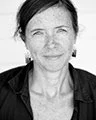
Catherine Schmitt
July 1976
Catherine is a science writer, author, and journalist with a background in environmental science and a Stonecoast MFA. Read more at catherineschmitt.com.
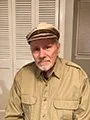
David Sheskin
Here Comes the Circus
David is a writer and artist who has been published extensively over the years. Among the places his work has appeared are Puerto del Sol, Shenandoah, Chicago Quarterly Review, Mythaxis and DIAGRAM. His most recent book is Outrageous Wedding Announcements.
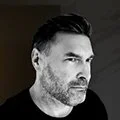
Topher Shields
Carnival Gospel
Topher is a queer poet from Aotearoa, New Zealand. His work traces a distinct queer mysticism. Born of rupture, ritual, and embodied light. His poetry appears in Puerto del Sol, The Shore, The Bangalore Review, Cathexis Northwest Press, The Dewdrop and elsewhere.
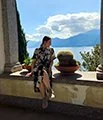
Zofia Sienicka
Papier-mâché
Zofia is a student of cognitive science and psychology in Warsaw, combining her love for creative writing with an interest in the philosophy of language and language development.
Jayasri Sridhar
One Last Carnival Before Landfall
Jayasri work has found homes in film festivals, international conferences and several publications including Kyoorius Designyatra, Insubordinate Vitalities (Writing Natures Vol 02), Bilori Journal and Heartlines Spec. Explore her projects at jayasrisridhar.com.
-
Do you use a pseudonym? Why or why not?
As a creative practitioner moving fluidly across design, research, film, writing, and other mediums, I’ve stuck to using my real name everywhere; I think it helps connect all the different things I create, and lets me build a steady, traceable, long-term identity around my interdisciplinary work. Plus, I love the idea that someone who knows me from the serious world of academia or the dignified sphere of Hindustani music might recognize my name on a whacky comic or an outlandish speculative poem and do a small double-take.What is the most confusing thing anyone has said to you about your work?
I have a strong sense of what my work is and where it comes from. When people read it differently, it’s more exciting than confusing to me. What I do find a bit tricky to navigate is when people admire my work in a particular field and suggest that I dedicate myself wholly to it—cue nervous laughter and insincere head wobbles.What things (snacks, pets, totems) do you like to have near you when you work?
Plants, a bottle full of water, and plenty of sunshine! That said, I really don’t mind the moody atmosphere of a dark, rainy day, especially when I’m writing.What writers/ artists/ filmmakers/ musicians have influenced your work—either the work itself, or the way in which you work?
So many! We’re really a sum of the art, stories, music, books and films we’ve experienced and absorbed, aren’t we? Ursula K. Le Guin is a huge inspiration, with her oeuvre of masterfully crafted strange worlds that gently resurface the assumptions we harbour about our own little strange world. I’m also deeply influenced by Indian classical music, mythology, folklore, epics, rituals, and epistemes; and these, of course, fall outside the more recently evolved concepts of singular authorship.Is there one part of your creation process that’s harder for you?
Going from my ridiculously long and well-organised bank of ideas to a messy first draft is usually the hardest part. I’m always convincing myself that each idea has so much potential, and that I should probably return to it (much) later, when I’m equipped with better tools.What kind of artistic legacy do you hope to leave behind?
One that flows across mediums to reimagine that which we take for granted about our societies, and the myths and materials that shape them. I hope to cultivate a culturally embedded and ecologically respectful practice that’s discursive rather than extractive, and builds meaningfully on all the worthwhile work that has come before it.Do you have a piece that you created early in your career that makes you cringe? Will you ever go back and fix it so it can be submitted somewhere?
Not really! Most older pieces show me how I’ve grown, and I’m definitely more inclined toward using that knowledge to add newer, better informed projects to my body of work.What is your biggest creative doubt?
Did I explore all the possibilities? Did I give this my all? How else could this have turned out? These doubts surface each time I’m beginning, building or wrapping up a project. I’m a super reflective person, so I also keep extensive journals documenting such dilemmas and internal dialogues. But ultimately, acting despite doubt and moving despite ambiguity are the best strengths one can develop as a creative person.What piece of creative advice have you received that sounded good, but was ultimately not useful to you?
This prevalent idea that consistently sharing your work on social media is absolutely crucial for a creative practitioner. It makes perfect sense in theory—visibility, reach, audience-building. In practice, though, I find it much more authentic (and enjoyable) to channel that amount of energy into actually creating; especially now, when social media is all about appeasing the algorithm gods. I prefer kinder deities, and make my offerings to them at jayasrisridhar.com.You’re stranded on a desert island—what three creative tools do you want with you?
Ah, finally—time, solitude, and the delicious luxury of guilt-free focus! I’d want an infinite journal to write in, a musical instrument to practice, and a solar-powered camera.

Veronica Tucker
Body Electric
Veronica’s poetry explores the intersections of medicine, motherhood, and being human. Her work appears in One Art, Eunoia Review, and Berlin Literary Review. More at veronicatuckerwrites.com and Instagram @veronicatuckerwrites.
Amanda Yskamp
Wonder Wheel
Amanda is a writer and collagist. Her artwork has appeared in such magazines as Black Rabbit, Riddled with Arrows, and Stoneboat. She lives on the 10-year flood plain of the Russian River, where she teaches writing from her online classroom.