
The glow of tracer bullets, the smell of fallout, the warmth of the fires….it’s a perfect day for a picnic.
Click the plus sign to read the full text.
-
A fake floral arrangement and stubby candle at the table’s center awaited their first reservation of the evening. The Bradleys took their seats across from one another, placed the table napkins on their laps, and exchanged warm smiles.
“I lucked into a reservation. Not bad, eh?” Charlie asked his wife.
“Not bad at all,” Mary agreed. “I would even call this place cozy. And what do we have here?”
She picked up the wine bottle by its neck and spun it around, holding it at arm’s length for further inspection.
“Cabernet Sauvignon, from Chile,” she read. “Ooh la la!”
“Vintage?” Charlie asked, leaning forward.
“2032. And look, it has this golden award sticker, too.”
“That decides it. We’ll take the bottle.” Charlie clapped in excitement.
Mary twisted off the bottle’s top, dropping the cap on the floor. She poured heavily for both of them, before proposing a toast.
When the words wouldn’t come, she said,
“To us.”
“To us,” Charlie repeated and took a big gulp. The warm red flowed down his throat into his empty stomach.
“So,” he said, combing a hand through his bushy hair, “how was your day?”
Mary laughed. “You idiot. Actually, it was spectacular. You know why?”
“Why?”
“I’ve been looking forward to this date for months. And now that it’s here, it doesn’t feel real.”
“I know what you mean. More wine?”
“You certainly know how to treat a lady.” Charlie refilled her cup to the brim.
“But we don’t have to rush too much, do we?” she asked.
“No, I guess not, sweetie. Our reservation is good for another hour and thirteen minutes.”
Mary laughed again. “Our reservation? You’re on today.”
“Only the best for you.” He winked.
In the distance, a piercing siren rang through the building, interrupting their exchanges of flattery.
“I hate that wretched sound,” Mary said.
“Me too. Hmm, only an hour left then,” Charlie conceded. “Let’s make it last.”
They clinked their glasses together, smiling and locking eyes before sipping away again. Mary looked down at her black heels, admiring their elegance, when something occurred to her.
“I never thought I’d end up with you, Charlie Bradley.”
“Is that right?”
“Yep. I mean, you were one of a thousand suitors, but if I were a betting lady...”
“What were my odds? One thousand to one?”
“I was thinking ten thousand at least.” She saluted her husband with her glass.
“Well, I’ve always considered myself a lucky man.”
Charlie’s cheeks already ached from smiling. His trusty dimples did their trick though, and Mary blushed, even after all their years together.
“When will the waiter arrive?” Mary asked. “I could eat something. Are you hungry, dear?”
“Maybe I’ll fill up on wine. Garçon!”
He clapped his hands twice next to his ear, and looked around the room, befuddled. Mary giggled and shook her head.
“Just the wine for now, then. Thanks for this, Charlie.”
“Thank you for wearing that dress. It’s been a while since I’ve seen it.”
“Oh, you like it? I hadn’t noticed.” Mary swung the fabric playfully under the table.
The Bradleys fell into comfortable conversation, reminiscing about the people and places that had filled their twenty-two years together.
“Remember that weird family down the street, where I used to get my nails done when we lived downtown?”
“You mean Stinky Pete and his smelly crew?”
“You’re awful.” Mary slapped Charlie’s hand before interlacing her fingers with his. “The Huffersons.”
“The Jeffersons?”
“Shh! I had a point to make.”
“Which was…?”
“You made me forget it!” They clinked glasses and Mary poured this round. Less than half the bottle remained.
“We’re drinking too fast! You’ll never be able to drive at this rate.”
“Don’t worry, honey. I’ll just call my driver after.”
“You always know what to do. That’s why I married you. That, and the money.”
Mary rolled her eyes and smiled; her front teeth coated lightly in red.
They shared their first moment of uncomfortable silence since the date began. Charlie swished around the wine in his glass while Mary rubbed her thumb along his hand.
Another siren wailed throughout the city, longer this time.
“30 minute warning already?” Charlie sighed, setting his glass on the table. “Time sure passes quickly with you.”
“Back at ya. Too quickly. Always has.” She leaned across the table, and they shared a kiss. Charlie’s beard scratched against her cheek. She had always hated it, but not as much tonight.
“The least you could’ve done was shave that thing off before bringing me to this fine establishment.” She drew a circle in the air around his mouth. “Nice tie though.”
“Why thank you, my wife gave it to me.”
“Well, she sounds lovely.”
“She is. More than she knows.”
Mary’s wine went down the wrong way. She coughed for long enough for Charlie to stand up, walk around the table, and rub her back. Her eyes were watery when she finally took a deep breath.
“Are you alright? Thought I nearly lost you there.”
“Sorry,” she took another sip of the Chilean wine, “I’m allergic to cheesy lines.”
“You’re in for a rough night then, I’m afraid.”
“I think we’re both in for a rough night, dear.”
They laughed before falling silent once again.
Eventually, Charlie broke the silence.
“What do you think happened to the Huffersons, anyway?”
“Dead, like the rest of ‘em,” Mary proclaimed in her best Texan accent, spitting on the ground.
“They don’t make ‘em like you anymore, do they darlin’?” Charlie replied, tipping his imaginary cowboy hat and chewing on a wheat strand.
Their wild west routine lasted until Mary noticed Charlie’s empty glass.
“That won’t do,” she said out of character. Her final pour emptied the bottle.
The siren returned, so loud their ears rang long after it had gone. Mary was the first to speak.
“Already…? Can you request the band to play ‘Final Countdown’?”
“I doubt they know that song. They’re a polka troupe.”
Despite her best efforts, Mary couldn’t suppress her laughter.
“So, this is it, huh?” Charlie asked. “I always knew we’d go out in a blaze of glory. Cheers, to us!”
Once Mary noticed Charlie was intent on polishing off his final glass, she embraced the challenge.
“I’m glad we did this,” she said, her speech slightly slurred, “beats going out there.”
“That’s for sure,” Charlie agreed. “I’d say we just have a minute or two now.”
“Well, thank you for the greatest date a girl could ask for.”
“Thank you for not standing me up.”
“I wouldn’t have missed it for the world.”
Charlie kissed Mary’s hand, then stood up and guided her toward him. Mary stood and swung out her arm, knocking over the empty glasses and bottle to the ground. She giggled as they shattered into a thousand pieces.
“Had to go out with a bang, didn’t you?”
Mary smacked Charlie’s stomach. “You’re so… so…”
“Come here.”
Arm in arm, the Bradleys crossed their small studio and paused at the window — the same window they had looked through for nine years. Seventeen stories up, the city sprawled out before them, unchanged except for the silence.
Charlie pressed his forehead to the glass and peered down.
The mirage vanished.
Their building was encircled by military vehicles a few hundred meters away. Below the building, the streets were bare. Most people had already evacuated months ago.
Five months ago, the Bradleys' building had been selected in the Overpopulation Demolition Lottery.
Four months and twenty-nine days ago, the Bradleys decided to stay home. Their neighbors called them crazy. Their families called them selfish, at the beginning. Their friends stopped calling altogether. With the world devolving into war, famine, and suffering, the Bradleys called themselves lucky.
Mary hugged her husband with all her strength as a loudspeaker in the distance counted down from ten.
“I love you,” Charlie said. His wife returned the sentiment.
They kissed for the last time and would never hear that wretched siren again.
-
In the Era of Manifestations, we saw visions of children stumbling out into the fields, whirling &
spinning, arms outstretched in what we first mistook for imitation of the dance, returning
with chests swollen, arms laden with their gifts from Mother Ann.We saw visions of seizing girls, dropping their brooms & writhing, lips frothing, speaking
strange tongues later recounted as orations of the Mother God of Wisdom, who advised
them on how to plait their hair.We saw visions of young sisters spinning saffron threads into gold, weaving a fine cloak upon
the loom, rocking & singing, fingers flying in madness, the visionaries weeping rivulets
of tears for the beauty of their work, throwing the mystical cloaks over their naked
shoulders & laughing.We saw visions of young brethren dropping to the dirt at their field work, covering their ears &
braying like the oxen, calling out in response to the terrifying roar of thunder & flash of
black lightning under a clear, sapphire sky.We saw visions of the elders’ & eldresses’ stony stoicism as they regarded these visionaries, who
fell down in their savage madness, scribbling in the dirt and carving wildly into blocks of
wood & stone, a strange geometry, the shape of which would serve as the map to
Heaven—they wept & tore their clothes.We saw visions of the people preparing for war, burying grain stores & bullets, burying coins &
jarred plums & musty woolen weave deep in the black dirt of their cellar floors.We saw visions of the great order stitched on muslin, ninety-nine thread lines leading to the
Godhead, paths of marble & dust, a raft of tree branches taking on water, & one path of
which is always unseen, untouched, unknown, even in our whispering fits of fervor.We saw visions of the people kneeling before our late Father Washington, who made himself at
home, who gingerly removed his terrible teeth, yawned & stretched, gnashed his gums &
groaned.We saw visions of Believers dancing with the murdered Chickasaw, blood running down their
legs, stomping out new beats and calls for mercy, pleading not for their salvation.We saw visions of ice & dust collecting in ether, releasing as the waters that flow from the mouth
of the glacier to push & turn our milling wheel, then rise as ghost breath, misting heavy
air.We saw visions of the limestone palisades, cut from the earth & drawn up by the Godhead, the
sloping sands & molded clay, the heat & pressure, the lava that cuts veins through the volcano & hardens again to rock.We saw visions of the sludge stew & life that quickens there, the fern fronds spreading wide,
Adam & Eve pushing their bodies forth into the struggle, re-joining us again in the first
dance, grasping again the first snake, taking again the first, most-bitter bite.We saw visions of bodies pushing forth into the fray, falling into chaos, darkness, the wood that
cracks and smokes, all the stars that multiply above black trees, & the white buds that push up from dank loam.We saw visions of light being smelt into hard metal, shaped & sharpened into trumpet & sword,
& the angels that bore these gifts down to us from the dream realms, our pupils pinpricks,
our synapses ablaze.We saw visions of our own ribbons of ash, our robes snatched by the wind, the dead buried &
worm-eaten now sweat-soaked & sundrenched, floating before us, offering forgiveness &
sound advice on right living.We saw visions of great armies, fratricide and patricide, starving mothers eating their infants, &
emaciated dogs attacking the children; we saw visions of the end.We saw visions of the clicking leaves, the empty house, the sagging floors, the breath that
dissipates & stills, & moored to one another, we walked the holy road, bearing the heavy
rood of this anticipated grief. -
45° latitude. The heat conserves everything.
Faces waver in hot-warped glass; the street exhales a low hum, afternoon folding over itself.
Air thickens. Fumes slice it like agar plates. Bacteria flourish—exotic, resistant, untroubled by centuries.
Gravel roads rise in dust faster than yesterday’s papers. From above they read as obsolete barcodes—the sky scans them with no interest.
Photons drift through gas, grazing stale air along the façades.
Here you first glimpsed quanta dripping like molten crystals from the glare of light.
Silhouettes crawl skyward; clouds break—the cyclone’s center twists the horizon into twin vortices.
Your breath presses the air; the atmosphere folds inward—thin turbulence stretching across distance, measurable only as a polynomial’s curve.
Triple point of no return.
Even water learns to ferment. -
The first piece of meat we ever ate together as a family came from my mother’s body. Earlier that day, she had asked the doctors to remove a bone from each side of her ribcage. The right one she sold for our upkeeping, and the left one she took home to teach us the taste of success and ambition. Unlike the bitter weeds we usually dug out for dinner, mother prepared her rib with a list of ingredients we had scarcely seen in our house. She caramelised sugar, pairing the rib with cinnamon, orange slices and bay leaves. Despite the sight of her hollowed waist, my mouth watered.
We picked at her flesh under dim candlelight, slowly, each morsel of meat densely flavoured with guilt. One of my bones will make a pretty decoration on a rich family neck, she said. But one of them will be for you, my children. Whatever they have, you shall have, too. I only ask you to try and deserve my love. We nodded along, our throat tight, our stomachs gurgling for more, our bodies burning with undeservingness.
She severed the leftover bone into two, and chained each delicate crescent bone across our necks, and pumped us up with visions. Pork cooked twice as tender, and lamb sizzled in chilli oil. Beef so fresh that the slices still carried leftover animal warmth. A world filled with gluttonous contentment, and lights so bright they could pollute. A life where our kneecaps would never again ache from winter’s bite.
Her sacrifice was greeted by our mediocrity—our not always straight-As, and the poor choice of friends we made, the constant reminder of what-we-were-still-not. She never said anything. Only tapped against our sternums, hard enough to make her own crescent rib vibrate against ours.
Her tap tap tap followed us through exams, job hunts, right onto the doorstep of an apartment in the city we barely manage to cover rent for. We heard it every time we chose to fit in; fill our plates with organic leaves that once grew in front of our door, dim the lights for baby wicks of flames that set the mood, bare our legs under minus fourteen degrees of cold just to find a moment of existence in the leering gazes of passing strangers.
She caved to illness before her first visit. At her funeral, we lit the parlour with the brightest lights and ordered an obscene amount of meat. Tearing through half a rack of honeyed ribs, the funeral clergy wiped his mouth and sighed. “Your mother missed out on so much good food. Shame, really. If only she wasn’t so vain.”
We stared at him. Under our burning gaze, he pointed at his chest almost defensively. “I’ve warned her about the risks of removing too many. But she wanted that cinched waist. Took out such a big loan for it, too.”
It took a while, but eventually, I managed to move. With numb fingers, I clicked open the latch of my necklace and dropped her bone amongst the barbecue carcasses. We don’t speak of her but the taps follow me into the years. I hear it every time my own children yell and scream. My hand would instinctively drift down, thumb and forefinger catching the ends of two floating ribs, reminding myself of their potential function.
-
I. The Quilt
Our house is nothing but skeleton, beams like ribs, plaster peeled to bone.
Yet here, in the dim belly of collapse, I find a quilt folded neatly.
Patchwork moons, hand-stitched stars, soft cotton faded by too many summers.
I wrap it around me, and it is like being held by someone who lived long before the sirens.II. The Mug
In a wrecked café I found a tin of chicory, beans dry but fragrant,
a cracked French press half-buried in ash.
The kettle sings when I balance it over a scavenged flame.
When the steam curls into my face, I almost weep.
The coffee is bitter, but I drink it slow,
cradling the chipped mug the way one cradles a fragile bird.
the taste on my tongue is proof that comfort survives.III. The Birds
Chickadees have claimed the skeleton of a traffic light.
Their songs arrive every morning like ordinary news:
not headlines of collapse,
just the announcement of sun, of seed, of flight.
I sit beneath them with my quilt and my mug,
their chirps threading through the silence,
as if the air itself has decided to mend.
How strange to feel joy,
with ruins piled around me like broken teeth.IV. The Bread
Scavenging brings rot
green fur on cans, sourness curled in every corner.
But once, behind a door swollen shut,
I found a loaf of bread not yet overtaken.
I cut away the mold, and the heel was still soft.
I ate it slowly, a Eucharist to survival,
crumbs sticking to my lips like prayers.
Comfort is never whole, never untouched
it is salvaged, gnawed at the edges,
but still, it fills the hollow.V. The Rain
The roof leaks. The walls groan. The foundation tilts like a drunk.
And yet when the rain comes, I press my ear to the tin.
The sound is steady, patient
a lullaby that makes me forget the fires, the floods, the collapse.
The room grows cold butI sleep like a child rocked in an iron cradle.
Tomorrow the roof may fall in.
But tonight the rain sings me whole.VI. The Stars
When the factories went silent, the sky returned.
I walk out past the fences where weeds crown the streetlamps.
Above: lanterns scattered across infinite velvet.
Stars I had forgotten existed,
stars not blurred by smoke,
stars that whisper there is still time to marvel.
I stand barefoot in the grass that grows through cracks,
quilt hangs heavy on my shoulders.
It is not salvation, but it is wonder.
And wonder is the coziest thing left.
-
The old witch lay dreaming in her bed,
her cat lay beside the dying fire,
many odd pictures danced in her head.The fire burnt orange, yellow and red,
the thoughts she had were grim and dire.
The witch lay dreaming in her bed.Over poisons, murder, most dread
so many had called her a dark liar.
Many odd pictures danced in her headOf her clients most were dead.
Some had thought her cheap to hire.
The witch lay dreaming in her bed.Many from her had desperately fled.
and fallen into the bottomless mire.
Many odd pictures danced in her head.Through her old head, many nightmares sped.
Of dark fearful forests and thorny briars.
The old witch lay dreaming in her bed
Many odd pictures were in her head. -
My first memory is the Pine on 3 Paul
Spiny fingers throwing fire at my house
fire-dependent Pine Whitebark I did not
know why fire resistant bark calledSpiny fingers burned everything but me
on the ground of 3 Paul Avenue
planting a dozen young Whitebark Pines
where my parents lay sleeping belownutcracker flights dispersing vampire seeds
over house and human and pinegrass dead
fertilizer and open space in which to grow
the Pine’s first saplings in generationsI just wish I knew that was not me when I ran
around her at midnight dumping oil across them
a dozen pines endangered few left
furious as the lost I lit an unknown lighterin severe fires Whitebark will burn
an entire ecosystem inside
fire resistant to all but kerosene footsteps
they are a firedancer speciesgeologic time cellulose empires live
1,000 years in the right conditions
the specimen on 3 Paul Avenue
is believed to be 400 years oldAt 3 Paul Avenue there is a fire
every 20 years a short lifetime
400 years ago the first 3 Paul fire
was summoned by the Whitebark Pine20 houses, 20 dead families like mine
to spread seeds we named desolation
20 investors made 20 new houses
kill the young pines spare the motherspare is the worst word I could have chosen
the Whitebark Mother summoned the first fire
lightning strike grey storm cloud with no rain
the rest were lit by peopleI lit a match but did not throw it
Whitebark Pines are endangered
they kill the young pines, leave the mother
the mother watches her young dieWhitebark Pines may have memories
scholars say it is unproven yet
if the pine recognizes you
it may lean forward ever so slightlyAn old man put his hand on my shoulder
only now did the whitebark pines lean away
“Good job kid, that tree killed my family”
he grabbed my match and flicked it to the ground“I tried to do this 18 years ago”
my house burned down 18 years ago
“that tree killed my family”
his family died so he killed mineWhitebark Pine are said to scream when they die
I swear I heard it as I ran away
I’m sorry I did not hold your hand before the fire
I promised when I was small and you were a specter I’m sorry -
Mara had taken the 7:42 from Ashford Station every weekday for two years. She knew the route the way she knew her own apartment, by feel, by sound, by the particular quality of light through smudged windows. Eight stops. One transfer. Forty-seven minutes, door to door. Between Crestwood and Delmar there was always a brief hush, so regular it felt like part of the schedule.
She noticed the tunnel in her second month.
It came between Crestwood and Delmar, a few seconds of darkness that swallowed the carriage whole before spitting it back into the gray November morning. She'd assumed it was a service tunnel, a maintenance passage, the kind of infrastructure that exists in the bones of every city without anyone thinking to name it. She hadn't thought about it again.
Not until one idle Tuesday, scrolling the transit map on her phone. Crestwood. Then Delmar. The blue line showed open track. There was no tunnel, no notation. She checked the official site, then an old PDF someone had scanned from 1987. Still nothing. The train passed through nothing.
She started paying attention.
The tunnel lasted exactly eleven seconds, she counted. The other passengers never looked up from their phones. A man in a grey coat always folded his newspaper at precisely the moment they entered, opened it again when they emerged. Not because he knew. Just habit, Mara told herself. People find grooves and live in them.
She started counting other things. The tunnel was deeper than it should be. The sound changed, not the clean acoustic shift of concrete walls rushing past, but something more muffled, more absorbed, as though the darkness had a texture. And once, only once, she thought she saw something on the tunnel wall. A shape. Long and pale, moving in the opposite direction of the train.
She told herself it was glare and grime, her own face doubled and smeared across the glass by the speed.
On a Thursday in February, the 7:42 left Ashford four minutes late. A signal fault at the depot, the platform announcer said. Mara barely registered it. She found her usual seat, opened her book, and settled into the familiar rhythm of the route.
The train stopped between Crestwood and Delmar. Not the gentle deceleration of an approaching station. This stop was abrupt, lurching, the kind that sent coffee into laps and phones to the floor. The lights flickered. The emergency strips along the floor pulsed yellow-white, carving pale faces from the dark.
They were inside the tunnel.
The intercom crackled. The driver's voice came through, calm, measured, the voice of someone reading from a script they hoped they'd never use. “Passengers, it looks like we’re going to be experiencing a brief delay. Please remain in your seats. I’ll let you know as soon as I get an update.”
Around her, people looked up from their phones with the mild annoyance of the inconvenienced. A woman across the aisle sighed and checked her watch. The man in the grey coat frowned at his newspaper. Nobody knew. Nobody had any reason to know. The train had never stopped here before.
Only Mara was watching the window.
The sound came from deeper in the tunnel. From the direction they'd come. From the dark that had no end on any map. It was almost like footsteps, a rhythmic pressure against the gravel between the rails, patient and unhurried. Then more. A second set. A third. An approach that had been, she understood suddenly, interrupted for two years by a train that never ran late.
She pressed her face to the glass. Her breath fogged it. She wiped it with her sleeve.
They moved the way a person moves when they are trying to remember how. Upright, but effortfully. Arms hanging too low. Heads tilted at slight angles, as though listening for something specific inside the train—heartbeats, maybe, or the particular frequency of held breath.
One stopped beside her window.
It turned.
She had enough time to understand that the face had all the right features, arranged in almost the right way. Eyes that reflected no light. A mouth that moved without sound, shaping words she couldn't read, or perhaps asking a question she had first invited two years ago when she pressed her face to the glass and refused to look away.
The intercom crackled. “Passengers, the delay has concluded. Thank you for your patience.”
The train lurched forward. The lights steadied. The tunnel ended and grey morning flooded the windows. Delmar Station slid into view with its coffee kiosk and its pigeons and its ordinary, indifferent commuters waiting on the platform.
Around her, people returned to their phones. The woman across the aisle stood and gathered her bag. The man in grey refolded his newspaper. They had been mildly inconvenienced and now it was over, and none of them had seen a thing.
At the next stop, Mara got off. She stood on the platform while the train pulled away and did not move until it disappeared.
She has not taken that train since.
But sometimes, very late, when the city is quiet enough, she thinks she can hear something outside her window. Patient. Unhurried. Moving like something that has finally learned where she lives.
She wonders if it was the noticing that did it. Or simply the morning the train ran four minutes late.
Meet the Our Contributors
-
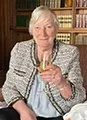
Sara Das Gupta
The Witch’s Dream
Sarah Das Gupta is an ex- teacher, aged 84, who worked in UK, India, Africa. She began writing aged 80, following a disabling accident; Her work has been published in over 25 different countries. She is a nominee for the Pushcart, Best of the Net and a Dwarf Star. -

Gord Deyo
The Tunnel Commute
Gord Deyo is a technical writer returning to creative fiction after a long career in professional writing. He lives in Toronto, Canada. -
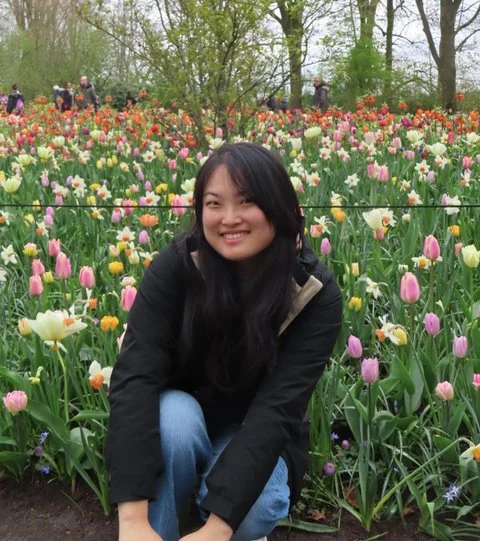
Annie ZH Sun
The Bones We Never Fully Bury
Annie ZH Sun is a Chinese Writer who grew up in Malta. She graduated from the Msc Creative Writing programme at the University of Edinburgh. Her work has been published in Hex, IHRAM Press, Bag of Bones Press, This is too Tense anthology, Silk and Foxglove Anthology and others. -
Jeremy Mandelbaum Giles
Firedancer Pine
Jeremy Giles (He/Him), an MFA Candidate at Calarts, writes fiction and poetry about the end of the world, among other things. You can find his work at his website jeremygileswrites.com and follow him on instagram @jeremygileswrites. -

Andrew K. Langley
A Table For Two
Andrew K. Langley is a writer and educator from Atlanta, GA. He has been published academically in Chile and made his fiction debut in 2025 with “Replayability,” published by Neon Dystopia, followed by "Cardinal Sin", to be published in After the Storm Magazine in October, 2026.
-
Robert K. Mueller
A Summer Day Near 45 Degrees Latitude
Robert Mueller was born in 1980 in Ljubljana, Slovenia. His work has appeared in the Sarajevo Queer Festival,Ganymede Journal, Wilde Magazine, and the Fourth Dimensional Kisses: An LGBTIQ+ Anthology. He lives with two grey parrots, Jakob and Laura.
-

Gloria Ogo
Cozy in the Ruins 2.0
Gloria Ogo is an American-based Nigerian writer whose work has appeared in Eye to the Telescope, Brittle Paper,Spillwords Press, and more.
-
Ripe Fruit
Ripe Fruit
Sarah Yost is a poet and an educator in Louisville, Kentucky. She has received support from the Bread Loaf School of English and the Kentucky Foundation for Women. Her poems have been published in Bacopa Literary Review, Kissing Dynamite Poetry Journal, Cordella Magazine, and elsewhere.