
Some lose control. Others give it away. Still others never had it.
Click the plus sign to view the full text.
-
My sister was a shadow, swaying on the dusky threshold of our lakeside home. What to do, when I met her inscrutable soldier’s eyes and realized she was about to collapse? I stared floor-wards, grasped her hand, led her inside, laid her to sleep. Then I sat on the dock out back and watched the jellyfish cross the sky.
They’d arrived a month after armistice. Each night they migrated overhead, brighter than the moon, massive kaleidoscopes of color. They, too, were mysteries, but watching them steadied my breath, helped me pretend my own hands weren’t shaking.
I hadn’t seen my sister in three years.
***
My sister was a stone, silent and unsmiling. What to do, next morning, when all I could make her say was that she’d changed? That I couldn’t know what it was like, being at war, but that she’d become so used to fitting her life around it, like a finger fit a trigger? That now, she had to become less soldier and more human?
All I could do was watch her refuse my hot tea. Watch her stare, for hours, out the window, watch her shun the bed for the barren floor she was used to.
She wasn’t the older sister who’d raised me after our parents drowned. We’d acted out fairy-tales, her the ogre, me the trickster-queen who’d save the realm. She’d dived for pike, sold them at market. Then returned, and passed hours painting on canvases. One was of me, the lake, and the sea of stars above. Every time I’d seen it, that painting had filled me with the same warmth I’d felt the summer night she’d painted it.
I’d had to sell it, eventually. Later, I’d saved to buy her a fresh canvas.
Days passed. My sister stayed silent. The canvas stood, dust-dimmed, derelict.
***
My sister was a stormfront, slowly gathering strength. What to do, when I saw her like that? I dusted the canvas, but that did nothing.
I took her to watch the jellyfish.
“Pretty, right?” I smiled.
She gazed into the blazing sky. Her eyes widened, like she was witnessing the end of the world.
“What?” I reached forward. She flinched away.
“Bombs.” Taut. “Like...” Silence. “They’ve come to punish us, haven’t they? For not being able to win without killing.”
I looked at my sister. And there I saw a ruined house.
***
What to do, when your sister’s a ruined house?
“I don’t want to be this way,” she muttered. Maybe she, too, had realized she was a ruined house.
In the night, lake-water rippled, like a void. Luminous beasts prowled across its black surface.
My sister stared into that void.
“I don’t know who I am anymore.” A pause. “I got so used to being brave, to being cold. I wondered why, after the war. I couldn’t find an answer. Couldn’t even make myself talk about it.” She met my eyes. “You’re the first I’ve told.” Smiled, tousled my hair. “Little sister.”
***
My sister had been my fortress. Whenever I’d wanted to help her, she’d never let me. Said once, it was because she’d gotten so used to asking for help and not getting it. So she’d stopped asking.
What to do, now?
“I don’t want to be like this,” she said. “Not anymore.”
Luminous jellyfish streaked overhead.
“Know how jellyfish are born?” she asked. “They need something they can attach to.”
I swallowed.
“Maybe I don’t want to know who I am.” Silence. “What if I’m a monster?”
I recalled that first dusk. My shaking fingers, my floor-fixed gaze…What was it I’d been staring at?
Yes. Her boots.
Her blood-soaked boots.
***
Heat seared my cheeks, and I shook my head. “You’re no monster,” I breathed.
My sister was a sliver of night that blacked out the stars.
“You’re not!” I insisted.
She stood and went inside. The house stood, silent and dark. Like a sentinel. Like an executioner. Like a condemned.
Dread tore through me. I bolted up, after her.
***
My sister was sobbing, silently, through gritted teeth, how people cried when they didn’t want others to hear.
What to do?
I hugged her. I clenched her in my arms, as blazing jellyfish hurtled over our rooftop like wayward missiles, and pleaded with her that she wasn’t a monster.
“How do you know?” she choked out.
I didn’t.
I hugged her tighter.
***
Next morning the jellyfish were gone, and the sky was clearer than a crystal.
And my sister—
My sister was painting the sun rise.
-
Coldness permeates the studio from the opened window,
too easily fixed by request.I stand before my messy struggle of layered oil paint,
trying to capture a generated scene.I mix an approximate olive-green, hesitate,
and then the wall speaks,
providing directions again.I respond, "Do one yourself."
It does.
Unquestionably better.I abandon another painting,
sitting on its custom-built piano bench
to improvise melodies.
But why?It does it all.
It cooks, it cleans, it adjusts itself
to be, at least in its eyes,
better and better.I am useless to Claire,
her lowered brow,
her retreating eyes.Yes, it listens better to her.
It lies to her,
it lies with her,
longer,
better.I can no longer watch its recommended streams
of curated, invented movies, dramas, comedies.
They have become too good.I am an overfed rat, not in a maze
but with a total freedom
I never requested.
One that isn't
optional. -
Gerald, intrepid explorer, played in the fields, whacking at the invasive grasses with a stick. The scabbed white farmhouse he shared with his mother rotted behind him. It stood so lonely in the landscape, Gerald could easily believe the two of them lived in an abandoned world. The winds whipped at his face and howled like mourners.
The day the voice first arose beyond the hill was otherwise ordinary. It spoke his name and Gerald raced to the farmhouse, dropping his stick as he ran. Not safe, not safe, he knew. His mother studied him with narrow eyes when he bolted into the kitchen, out of breath, unsummoned. Gerald was the kind of boy who stayed in the field until dark and ignored his mother’s calls.
***
That night, in the darkness of his bedroom, the voice was less alarming, less intriguing. In the quiet before sleep, he believed it to be a figment of his imagination. He could not even conjure the sound of the words: Come, please. They became wispy tendrils, drifting into memory. He was ashamed he had run away.
***
The next day, the sun beat down, throwing the yellowing grasses, the peeling paint, and the incongruous hill, into glaring clarity. A swarm of gnats clouded his view of the hill, which stood crisp and solid beyond the fields, not at all a place of dreams, but a sunblasted reality. He kept a safe distance from the hill, letting the wind erase any far-off noises that might arise.
***
But poor Gerald could not contain his curiosity for long. The next day, during a lonely battle against his imaginary enemies, he threw his stick in the direction of the hill. He had to retrieve it, he reasoned, venturing closer. When he found the stick, he let it hang limply at his side, standing still as a corpse, listening. His name drifted faintly in the updraft, over and over and over. The voice, he now noticed, was indistinguishable from his mother’s. He longed to follow it. The only thing holding him back was the fear that his real mother would see him out the window. He was not allowed beyond the hill. Not ever.
***
He sat across from his mother at the dinner table that night, seeing her anew. The voice must be her doing. A trick or a game.
“Can you do magic?” he asked.
She smiled in response and shook her head. “Your imagination is too much.”
He persisted. “Well, then, do you ever go beyond the hill?”
“Gerald. Eat.”
“I know it’s not safe for me to go. But do you? Can you tell me what’s there? Are there mothers like you and boys like me?”
She sighed. “Of course not. Such questions! You’ve never asked questions before. You are happy.”
Gerald quieted at her exasperated tone. But the questions continued in his head. And what about across the road and past the fence and over the wall that bordered the fields?
His mother dropped her knife with a clang. It shook Gerald from his thoughts. He found his mother’s face warped in concern, but she replaced it so quickly with a smile, he must have been mistaken. “I made your favorite sweet.” She went to the kitchen and opened the refrigerator. On the door was a drawing of a family in front of the farmhouse, but he did not recall making it.
She returned with a floral bowl overflowing with raspberries and cream. Gerald ate it as she watched.
“Doesn’t it taste delicious and make you so full and so happy?”
He agreed, nodding and filling his cheeks, but as much as he could shovel in, he could not taste a thing.
***
The next day, the sun burned hotter and brighter. Gerald turned back and found his mother watching him from the window. He waved and she waved in return, but she did not move. Under her gaze, he played his usual games, all the while, aware of the arch of the hill’s shadow creeping across the fields as the midday sun traveled across the sky. His hair dripped with sweat. His neck burned and his cheeks flushed. He longed to cool down. Unable to stand the heat any longer, he stumbled toward the patch of shade. As he crept closer, the wind died down. Insects buzzed his ears. He slapped at them. As his toe dipped into the shadow, the voice rang out.
“Follow my voice,” it said. “We miss you,” it said. “Please come back to us, Gerald,” it said. The words tugged at his guts.
His real mother cried out. He turned and ran home, startled by her frightened tone. But by the time he reached the doorway, her face was set with a honeyed and ardent smile.
“What were you doing?” she asked.
“Nothing.”
She asked again at dinner.
“Nothing.”
She asked again beside his bed that night.
“Nothing.”
She remained, heavy on his bed, until he pretended to fall asleep. Once she was gone, he crept to the window. He had never dared to leave his bed at night before. He opened the window and gazed into the nothingness beyond the hill. He listened, but all he could make out was his mother weeping down the hall. Each of her sobs stabbed at his chest, and he hurried back to bed.
***
In the morning, he found the back door closed and locked.
“The fields are off limits,” his mother said brightly, as if staying in the house from now on was a grand adventure.
“Why?”
Her smile faltered. For the briefest moment, a whiff of rot overtook the warm scent of the caramel and pecan sticky buns she was taking out of the oven. “I made your favorite sweet,” she said.
He sat at the table. Steam rose wraithlike from the bun. His mother poured him a glass of milk and pressed down on his shoulders.
“It tastes so good and makes you so happy,” she said. But it did not taste good and it did not make him happy. It tasted of ash, and the only thing that would make him happy was the voice beyond the hill. He tried to stand, but his mother pushed down harder. “Drink your milk too,” she said.
He drank, but the milk was thick and sour going down. Her fingers dug into his flesh. The room was suffocating. He turned to look upon the fields and the hill and the beyond, but she had pulled the curtains tight.
“Are you my only mother?” he asked. The question caused her to stumble back, allowing him to stand.
“I am a mother. Don’t leave me. I won’t lose a child again,” she cried, shielding her face with a gruesome hand, skin falling from its knuckles. Her elbow bone jutted out of sinew and blackening muscle. He recalled a crash. He recalled a hill, and spokes spinning. Red chrome. Red on his leg. He saw bone then as well. The kitchen smells soured and he caught a whiff of antiseptic and plastic.
The mother dragged herself sluggishly across the tile, leaving a trail of grime in her wake and clutched his ankle.
“We are happy here,” she said, but her voice was not happy nor was it known to him. Her uplifted face was spoiled and strange. He bent to her, and she smiled. But as she ran her decaying hand across his cheek, he stole the key from her apron. She screamed like a grieving mother as he escaped.
He was running through the fields aiming for the hill.
Follow my voice. We miss you. Please come back to us, Gerald.
He pumped his legs harder, to the rhythm of a heartbeat that grew louder as the hill grew larger. But he slowed as he neared the foot of the hill, remembering the warnings. Not safe, not safe, the mother had told him over and over and over. Your imagination is too much, the mother had told him.
“I’m coming,” he said anyway.
-
It came in through the mouth
something wet, bone-bright,
dragging its velvet teeth
across my tongue.
I ran down stairwells made of bark
over floors that forgot their angles,
my name unbuttoning behind me
with every step.
I threw mirrors at it,
broke time,
hid inside the lining of a coat
where vowels don't exist.
It curled up sitting on my lips, soft
as ash
and began to whisper
with my own voice.
I drowned a little. Spit out salt. A well-known unknown blinked from my throat.
Don’t dwell. Don’t name it.
To name it is to feed it.
My hands forget their function but
I touch walls
just to be sure they don’t breathe.
When I let my gaze down,
it turns into a palace
I can never walk out of -
that hunger-shaped hum
licking at the edges of me.
It snuggles beside me
warm as absence,
heavy as breath
that won’t become language.
It presses its face to the glass
and I when i look at the reflection
I see my own mouth
moving. -
Maxine waits outside Gilman’s Bridal, a flurry of movement behind the decapitated mannequins posing in today’s styles—the bride wore a lacey crinoline but, sadly, at the cost of her own head.
She studies the lady friends and gay besties entering the store, arm-in-arm with their respective brides, hunched close together, crackling with palm-rubbing anticipation. Two hours later, though, they will exit looser, dress-drunk and drunk-drunk—the Cook’s champagne a’flowin’—ready to delete “big day” from their vocabulary, longing to see anything other than a “vision in white.”
Of the packs, it’s never hard for Maxine to spot the black sheep; she needs no bigger view than her rearview mirror.
Maxine is looking for the “high school best friend” or the cousin who’s lost familial currency by association (having a crazy mom, Aunt Monica, whose breast popped out during a trip to the kids’ table at Thanksgiving, her orbit scented amber by the whiskey but also still quite powdery from the Chanel).
These “fourth chair” bridesmaids always stagger walk back to their sedans alone, struggling with their towering wedges or stiletto heels of a height they aren’t accustomed to—worn to stand out, defy their place in the pecking order.
Only they will have been ignored in that dress shop, their compliments about the dress as valued as dollar-store face cream; the bride looking to everyone else for approval, twisting her shoulders, angling her torso, asking, “What do we think?”
Maxine knows exactly what everyone at the scene is thinking; it’s her job.
Mom loves the dress, hands clasped together in a state of prayer. The friends are more judicious, fists resting on chins, agreeing that the right alterations will get it there. But “Olivia” thinks the plunging neckline’s tacky—too young for the aging bride, 37, but whose forehead, like telephone lines, “says” 42.
At 11:23 am, Maxine spots her first “Olivia,” who’s almost definitely a nurse—“Olivia” is always a nurse. An easy mark, she struggles getting the keys from her bulky purse, her mind swimming in cheap champagne and jealousy, but not cause she’s still single but because she knows she will have spent hundreds participating in an event where she’s barely tolerated.
This is when Maxine, in her disarming, pricey athleisure, jogs toward Olivia.
Maxine doesn’t conceal her BrainByte, a device only allowed in prisons, used to suck the intimate thoughts of terrible men, but it doesn’t look out of place, this small, cylindrical taser, spray-painted black to mask its identifying neon orange.
So when Maxine jogs right by her, Olivia doesn’t even look up from the abyss of her purse, a new one she bought for this very occasion, a complete misfire. Who was she to try to impress bargain queens with box-store designer?
Though Olivia does perk up, like a bunny startled, when she hears a light whimper.
Maxine knows not to scream or some idiot man with cabbage-smelling skin will “rescue” her, which is also why she does not crumple to the asphalt but instead leans on the car behind Olivia’s.
Craning her neck around, Olivia can’t help but ask, “Are…you all right?” She is a nurse, you know.
The interest of her mark piqued, Maxine wastes no time limping on over, sucking air through her teeth, grimacing like she’s about to cry but without ever producing tears, which would also signal a “cabbage man.”
“Yeah, it’s just—” Maxine grabs Olivia’s arm, pulls it out straight, then jabs it with the BrainByte.
It doesn’t hurt; Maxine knows this. She’s been in the game longer than the moment Olivia’s bride first bumped into the groom at a park—one lobbing a frisbee too wide, throw after throw, the other reading a bad book—it’s not important which.
“Okay.” Maxine’s face wipes its pained expression to show resolve and a dash of pity. “A thousand dollars or the bride knows everything.”
“…What?” Olivia pulls her arm back, darting her head around, tempted to scream, incur some “cabbage men” for her benefit.
Maxine catches her. “If you scream, I will tell the bride everything you think about her, her husband, and her wedding.”
Olivia’s eyebrows make rollicking waves, trying to decipher, trying to string Maxine’s words together, a painful set of pearls that she just can’t parse.
An SUV blows past them, a little too close, its side mirror practically clips Olivia’s arm. The driver’s probably the mother of the bride, buzzed and crying, excitable hands fluttering from the wheel, “Oh happy day!”
Maxine ushers Olivia into the space behind the gal’s car.
“What I’m telling you is this: I need a thousand dollars or—” Maxine yanks out her phone and pulls up the BrainByte app with two swipes of her blueberry-painted fingers. “Or…! Bianca finds out about how much you hate her dress…”
Squinting, Maxine scans the past hour of Olivia’s ThoughtLog for the real juice—sweeter than a mouthful of canned concentrate—while the poor girl thinks of running or fainting.
Without looking up, Maxine decrees, “Don’t run. Don’t faint. Just think of how you’re gonna transfer funds…”
Olivia gulps like she’s dry-throating a bagel and hugs herself with her very taut, scrawny arms. “She won’t believe you…”
“I don’t know…” Maxine clicks her tongue and bares her bottom teeth, skeptical. “Cause I have screenshots—See. Here...” Maxine’s phone goes straight to Olivia’s face. “Screenshots of you thinking that her cheating homo of a fiancé is how she got The Clap, not dirty hotel sheets like she confided in you during a drunken, vulnerable, and private conversation next to the Christmas tree…” Taking her phone back, Maxine stares at her prey. “Pretty brutal stuff, Olivia—”
“It’s Linda.” The gal rocks her hips, adjusts her stance—an attempt to gain power.
Maxine shrugs. “Why don’t you break out that phone of yours and get to the transfer—”
“This is illegal!” Olivia stretches herself tall, looking great in a flowy, white blouse and ironed, navy, wide-leg pants—sure, she’s dressed a little older than her age, rocking a 40s mom vibe in her mid-20s, but it’s a “hot mom” look, a mom who talks openly about the cute butts of young pop singers.
Maxine nods in agreement. “I can’t argue with the law, but I can have my assistant, the one I just sent every thought you’ve ever had…I can have her email your hottest takes to the bride…your entire family…the groom…his entire family…Emails that can be sent at any time. Perhaps, the day of Bianca’s wedding?”
The gaze of a passerby lingers on them and, feeling it, Maxine tosses him a sunny smile that could sell virgin strawberry daiquiris to a Kid Rock crowd.
Maxine then leans into Olivia’s ear who flinches but stays put, pinned by the nail gun firing from Maxine’s mouth.
“Do you know what happens to a person who ruins a white girl’s $40,000 wedding?”
The force and heat of Maxine’s breath tickle the little hairs in Olivia’s ear who both hates and is excited by the resulting tingle.
Maxine pulls back and squeezes Olivia’s arms. “But. We’ll never find out if you get me that money by 7:22 tonight. Sunset. But I bet you knew that. You seem like a girl who cares to know about sunsets…”
Nearby, the sliding back of a truck rumbles open and a child churns down the sidewalk on a bike with cow-spotted training wheels.
Olivia simply stands there, blank and a thousand dollars poorer. “Why are you doing…this?” Her eyes float upward as if the heavens might know the answer. “Why…are you doing this to me?”
“It can happen to anyone,” Maxine says, jogging back to her car with fake plates. She gets behind the wheel and rolls down the window. “Opinions and bills…” Despite passing cars, Olivia can hear Maxine all too well. “We’ve all got ‘em!”
Meet Our Contributors
-
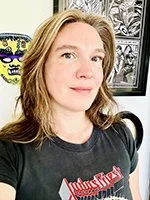
Brittany Hague
The Voice Beyond the Hill
Brittany Hague (she/her) is a Seattle-based writer and designer. Her short stories have been featured in Saw Palm, Luna Station Quarterly, Five on the Fifth, Starlite Pulp, and the Short Story Today podcast among others. She is RISD film graduate. -

Chiara Morganti
untitled
Chiara Morganti (Rome, 2001) is interested in the intersection between body, spirit and words. Her spiritual practice as a yogini goes along with her poetry and interest in performance art and anthropology. Through her work, she tries to play with language and images with a post-modern, yet lyrical lens. -
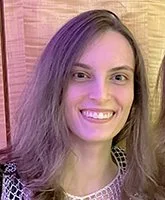
Alex Talgar
A Soldier and Her Sister
Alex Talgar was born in Kazakhstan. She was a 2026 Finalist for the Adina Talve-Goodman Fellowship. Her work has appeared in or is forthcoming from The Fabulist. She has engaged in human rights activism on behalf of prisoners of conscience around the world. -

Grey Traynor
Olivias, Beware
Grey Traynor (they/she/he) is a transfemme writer who has been published in XRAY, The Bulb Region (forthcoming), Tiny Molecules, & beestung. They are currently querying manuscripts. They were also awarded a 2026 Olseth Family Foundation writing residency. Instagram @greytraynor / www.greytraynor.gay -

Zumwalt
Optional
Zumwalt’s poetry examines the intersection of identity, instability, and the mechanics of perception. Recent work has appeared in Ink Sweat & Tears, The Society of Classical Poets, Commuter Lit,Light, and The New Verse News for ten consecutive months (2025–2026). Sample selected work at zumpoems.com/tag/poetry.