
We’re not sure who rules the animal kingdom, but it’s not us.
Click the plus sign to read the full text.
-
“It was too gray out there.”
That was the excuse Iris gave. Teacher used this word, her mouth twisting. Excuse.
Iris had stolen her father’s keys and opened the back door of the butterfly house. The alarm even sounded. Every last butterfly on Earth had swarmed out in a cloud.
They’d all be dead by morning, said Teacher. No more butterflies. She hoped Iris was happy.
I think she was. None of the rest of us could imagine what all those colours must have looked like against all that Fog, wings flapping into the air that would kill them. But Iris didn’t have to imagine it. She saw it.
Then we all watched as Teacher dragged her away. There was a smile on Iris’s lips and a stare in her eyes even as her bare feet were scraped across the concrete. Whatever those butterflies looked like— whatever she saw—was worth it.
I will always remember that stare, that smile, even if I’d forget in time the flesh that shaped it.
I would forget, too, what butterflies looked like. Colours and wings. Or was that just birds?
We never saw Iris again. Her cold chair was empty for a while before a boy from the lower levels replaced her. He was underfed and wiry like Teacher warned us about.
The boy sat in front of me and I stared at his scalp, colorless where hair might never grow. He glanced back at me over his shoulder. Eyes wide and pale. I wondered if Iris looked like that now. Her father too. Surely.
They were with the Protectors now, Teacher said: in that black hole of memory they alone kept.
I looked for Iris from time to time. I couldn’t help it. Each lap during exercise. Every drill. The Gathering, the Scything, the Silence.
Sometimes I even thought I saw her. A smoky face behind glass. An opaque girl in a suit of silicon. A silhouette in a dead corridor. I’d know that wry smile, those impish eyes. I was sure of it.
Time passed in a way we no longer measured. I became taller but not heavier. Silhouettes became shapes became shadows. My own hair stopped growing, face sagged. I coughed less, choked more.
We had names once. Real names.
I was not sure. Not anymore.
And then the things that did the counting spoke in one metallic voice. Safe.
The Fog lifted. The doors opened. We stepped out.
And there, on every dead branch and every smoking rock and every misty ray of sunshine, there were butterflies. Hundreds. Thousands. A million more than before.
The colours, the wings. How could I have forgotten?
I inhaled deeply. Air, fresh and real.
A butterfly, wings flickering, settled on my hand. As I lifted it, its wings smoothed flat as if to greet me. I blinked and a pair of eyes looked back at me, ringed in soft black.
I knew the look. I know it well. I am sure.
-
Dusty stone benches, like gargoyles
watching over a shady corner
of the schoolyard, became my fortress
at recess, away from giggling classmates
playing neverending chasing games.Even teachers on duty overlooked the benches
on their meandering patrols, letting me preside over
flighty squirrels, chatty birds, dutiful ants—
each chasing their friends around our little domain—
and a single brave worm.When droplets tapped on my raincoat,
only Arthur the worm stood with me
against watery cannonballs, sheltering
under towering legs of benches,
until one day, he came across a chasm,
dark as a swallow’s gullet,
and climbed right in, leaving me
alone with the whipping rain.When Arthur broke through topsoils again,
a new worm followed, chasing and frolicking
from grass forests to stone buttresses,
all the way to the depths of the Hole.But when Arthur’s group became four,
then eight, I dropped to a crawl,
brushed aside crinkling leaves,
and stared down the Worm Hole
where light dared not reach
but where the magic I needed lay.Soon, I’d have someone to chase me too.
-
Beware the bitter song
of lost sirens, scorpions
stirred from the sand dunes,
writhing and desiccated,
waiting
hungry, desirous,
for the frenzy of salt and flesh.Skyward they claw, undead
creatures of mottled grey
glass, born of dried oceans,
and lightning’s ruminations,
haunting
the arid boneyards
of time-eaten warships.Offer a tide-worn seashell,
precious and ancient,
and you may escape them,
as they strain brittle ears
listening
for the echoes
of their former selves. -
“Poetry is a fresh morning spider web telling a story of moonlight hours of weaving and waiting during a night.”
~ Carl SandburgI.
Is it possible?
That we live among a quadrillion arachnids. To clarify, a quadrillion has
fifteen zeros. Think of it as one million multiplied by a billion.The average household has sixty-one spiders. Under a cast-iron bell, behind a
can of cleanser, beneath a hairbrush, in the tuft of a bedroom slipper.While I’ve never seen a family of spiders I imagine them quietly decapitating
earwigs, ants, gnats, fleas. Saving my children from ticks and Lyme disease.II.
All told Aranea eat between 400 – 800 million tons of prey each year. We
would die without those who eat the pests that eat our crops.Spiders die from skewers and grills and hot oil, served up by vendors in paper cups
on dusty sidewalks. No judgment from carnivore hell.Spiders are cheap protein and people need to eat.
When my brother was five he pulled the legs off a common house spider
leaving hair-fine fangs—flicking it into the fireplace to
pop and sizzle like corn.III.
I once batted a black widow from the collar of my father’s muscle-tee.
globe-shaped abdomen and red hourglass
bloomed in pernicious symmetry.“Always shake out your shoes before putting them on,” he forewarned.
“Females are the worst.”The combined biomass of adult humans is 287 million tons. If spiders
mobilized and if they really wanted to
they could eat every person on earth in less than a year.I have an annoying floater in my right eye an involuntary slap
i watch eight legs wither
obliterating an ancestor of four million centuries.Is it possible?
-
Before land, water.
Before land, water.
Listen to the whales.hello hello hello
hello hello hello
here am I here am I
and this my clanListen to the whales,
crisscrossing oceans,
straddling sea and air.hello hello hello
dive below low low low
surface and blow oh! oh!
spout and blow! oh!You don't understand.
Listen to the whales.
Before land, water.hello hello hello
where did they go? where? where?
they who winnowed the slow
great lords of below.Listen to the whales.
Before land, water.
Before maps, dragons.hello hello hello
why did they go? where? why?
fang and shadow and salt
great lords of below. -
Sometimes the path leads lonely away from home, when the wind wails and the snow lies deep, and the fire dies feckless in the hearth. Your axe has gone missing, your woodpile dwindled to a ruin of sticks.
You must bring warmth to the cabin you built with your own timber, ignite the heart within the desolate ribcage. So you bundle five layers thick and intrude into the silent pine forest, splitting straight down the mountain, pocketknife and pack of icy peanuts in your coat. Your exposed nose bears the brunt of the elements as you steer through a dance of whipping limbs and shifting shadows, toward the only road to town.
A distant, warmthless sun observes your descent through the graveyard of frostbitten branches, a massacre of needles strewn across snow. You mount a moldering log, desiccated wood crumbling under your weight, and as you exhale in that rush of vertigo—boot heel plunging back to solid ground—you see a giant deer, watching from down the slope.
It is as tall and broad-shouldered as you are, with black matted fur and a single twisted antler in bloom. The surviving branch is a maelstrom of mutated bone, ten points, twenty—grotesque and beautiful. The other a crusty, festering stump, split down the middle as though lanced by lightning.
Spirit of the Forest—the name floats unbidden into your mind. The Mahakimut Tribe warned of a god presiding over this maze of mountains, a god who grew enraged when the white men came, felling trees, staunching streams, slaughtering for sport. A hunter’s bullet had splintered its antler, the Mahakimut claimed. The tribe is long gone now, carted off to reservations, but sparse sightings of the spirit are reported to this day. You’d always dismissed it as tourist-fodder. Yet here stands the “legend,” as still as the twenty-point goliath mounted on your wall.
You put no stock in magic or mysticism. Nonetheless, the beast’s head is a tantalizing prize. You consider racing home for your rifle. But not today. You must complete the long journey home before nightfall—you must relight the fire, or risk freezing. You wonder how many of this deer’s kin you have slain in your five years on this mountain. Perhaps you can lure it here again.
The deer scrutinizes you, head cocked to the side to counterbalance its phantom antler. Its glassy eyes patient, calculating, fearless. Only its tail flicks.
You stuff gloved hands in your pockets, avert your eyes, and spare a half-mocking bow as you pass, on down the mountain into a cluster of deciduous trees, where skeletal leaves add crunch to each footfall. The deer follows at a distance, though it stills at your backward glances like a child half-hidden in a doorway. You smile wistfully, wolfishly, continue crunching. Through the trees, you see the white scar on the ridge where the blanket of forest was ripped apart to pave the highway.
The hair bristles on your neck, and you turn again. The deer has ventured closer, within a stone’s throw, but freezes now in stoic, marble-eyed innocence, one hoof forward, eerie gaze never leaving you. You no longer smile.
Pulse rising in your temples, you march faster, alter course, weave through a denser snare of woods, put a patch of thorny bushes between yourself and the beast. Ahead, the white scar widens. When you turn again, the creature is closer still, within a dozen paces. It grunts at you, a hollow gurgle. You paw in your pockets for a crinkle of peanuts, scatter some in the brush, and advance, down and away, shoulder angled so you can watch from the corner of your eye as the deer, slowly, inevitably, approaches the salted offering, nudges it with scabby nose—and passes over it.
Panic sears your ribs, you make haste toward the scar, but the task is not easy in these heavy boots. You are soaked in sweat beneath your layers, and town is still miles away. The deer grunts again from just behind you, louder, a challenge—so loud that it startles your legs into a tangle with a squatting holly bush, and you topple into sunlight, breaching silvery surface crust and sinking into soft, snowy innards. Despite your protective skins, you knock your knee on a protruding stone, hear a snap, feel a stab of excruciating pain.
The Spirit of the Forest, patiently, implacably, approaches. Mere feet away, you smell its earthy, rotting, rancid musk. Its bronze snout sniffs at you, seeking to place you like a wrinkled hand fumbles at a photograph. You lay trembling, panting, padded palms wedged beneath the surface, holding you above choking snow and debris. The puff of your exhalation catches the sun in all its brilliance, curling out, sparkling with all the rainbow’s colors.
The creature nudges your shoulder, and its abyssal eyes blink. With a low hiss its lip curls upward, and it shifts its razor-sharp antler nub, slowly rebalancing, angling it toward your Adam’s apple. The jagged topography of the splintered nub ripples between sun and shadow, winking like a demon’s eye.
Meet Our Contributors
-

Julia Ember
Glass Siren
Julia Ember is a queer, neurodiverse author of sapphic fantasy fiction, and a speculative poet. She is the author of Ruinsong and The Seafarer’s Kiss, named a best Queer Book of 2017 by Book Riot. Her poetry is forthcoming in Star*Line and Menace.
-

T. D. Freer
Spirit of the Forest
TD Freer lives in Asheville, North Carolina—land of sky, and mountains, and floods—writing all the time about whatever he can. Fond of concise forms, he explores subjects from the irresistibly silly to the inescapably grim, on scales ranging from microbial to universal. -

Mary Soon Lee
Whale Dragon
Mary Soon Lee hides behind a cryptically named website (marysoonlee.com) and BlueSky account (@marysoonlee.bsky.social). She has won the AnLab Readers' Award, Asimov's Readers' Award, Dwarf Stars Award, Elgin Award, Rhysling Award, and Utopia Award. An illustrated edition of her epic fantasy The Sign of the Dragon was published in 2025. -

Ian Li
Worm Hole
Ian Li (he/him) is a Chinese-Canadian economist, developer, writer, and poet. His writing appears in Nightmare Magazine, Strange Horizons, Year's Best Canadian Fantasy & Science Fiction, and the Toronto subway system, among other venues. Learn more at https://ian-li.com.
-
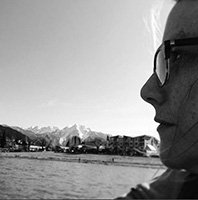
Ashleigh Rajala
An award-winning fiction writer and indie role-playing game designer, Ashleigh Rajala lives and works on the Canadian side of the Pacific Northwest, on the traditional territories of the Coast Salish peoples. Her work has been published in numerous journals and anthologies, including Room, Redwing, Quarter Castle, and SAD MAG.
-
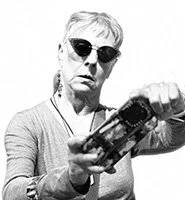
Sherry Shahan
Like Spiders
Sherry Shahan started ballet at 40, and pole dancing at 75, which seems sort of silly. She holds an MFA from Vermont College of Fine Arts and has been nominated for 2 Pushcart Prizes (Poetry and Short Fiction) and Best American Short Stories.