
-
They told us love was gravity
what they didn’t say
was that gravity devours.We built our home
on a moon stitched together
from abandoned vows.It rotated around your anger,
around my silence,
around the star of What-We-Used-To-Be.Every revolution
dragged us closer
to combustion.The astronomers called it
inevitable.I called it us.
Your voice crackled through the comm:
“Stay in orbit.
We’ll stabilize.”But stabilization meant
becoming debris
circling something already dead.I watched continents on your surface
split like cracked porcelain.
Our oceans boiled into accusations.The day I fired the thrusters
the sky screamed.Breaking orbit
felt like tearing muscle from bone.
The ship trembled
as if loyalty were a physical ligament.You shouted my name
until it warped in the vacuum.For a moment
I almost turned back
almost chose
familiar destruction
over solitary survival.But I had seen the math.
Love with you
was terminal velocity.So I burned fuel
like a prayer set on fire.When your gravity finally loosened,
I sobbed in zero-g,
tears orbiting my face
like small, stunned planets.Behind me,
your moon fractured
not because I left,
but because it had always been breaking. -
How can you expect to become a Starling?
When you haven’t even become an Earthling yet?These petty apprehensions of nation and race will not suit the Starmind,
that supernova-forged, adamantine thing it is, built to outlast all:
Vacuum of deathless space, crush of blackhole, heat of bluest star.
Nor will these exacting delusions of exclusion suit that being you must become.So, prepare this very day, this very hour and minute.
Cast down that tribalism which thwarts your every aspiration.
Jealous ghost of dead centuries that rides your back, always looking back,
whose only power is superstition.Forget vengeance.
Convict revenge.
Place hatred in the docket, for once, and watch it squirm!Mount on molting, embered wings,
and claim your new mind.Renounce petty difference.
Embrace the solid core of each stranger,
disregarding the temporary face they wear.And together, we shall rise to face our Star-bound fate,
or perish in some wailing, twilight doom. -
1. On the Road by the Cemetery
Throwing rocks at stars,
barely missing cars.The village children punished,
not Amanda Mae.2. Distant Cousins
There are tub baths, and there are mud baths.
Amanda Mae takes a mud bath every day.
She found a liquid trapdoor Earth—
root cellar, soup cellar.
Not much of a bomb shelter.
But rest assured, Amanda Mae survives.
Mud bubble-bath. The great mud-bubble escape.
Jelled enough to pass like a needle,
shield Amanda Mae
from Van Allen radiation.
Its closed system of crud.
Look, Ma, no oxygen tank!
Out there she found a planet of dry cliffs.
Rock machines howled at the moons.
Distant, distant cousins
to the gunk on Amanda Mae's face.
They cried for their inventor, the One Creator
who built and abandoned them.2a. Legend
He never told his story.
He hid his brothers and sisters.
He was the only being thinking and breathing,
at the same time even.He was ashamed of us,
or ashamed of them.
Or protecting us all.3. Swimming in Dirt
Amanda Mae and the rock machines
built towers of dust.
Since her escape,
Amanda Mae has better aim.
See where you can go with a trap door.
Amanda Mae was trapped in a mud bubble
and she cracked the sky. -
The portal hummed the way old hospitals do at night—not loud, not quiet, just enough to remind you that something vital was working while everyone else slept.
Elena Ruiz stood at its edge and checked her watch out of habit, even though time had already begun to misbehave. The portal was a vertical oval of light, translucent as milk glass, set into the bedrock of a canyon that did not exist on any map. Through it she could see a sky the color of bruised peaches and a horizon that bent subtly upward, as if the world beyond had been cupped by a careful hand.
“Vitals stable,” she murmured, mostly to steady herself.
She was a nurse. Not a soldier, not an explorer, not a diplomat. Her uniform—white, practical, already smudged with canyon dust—felt absurd next to the armored figures of the Interdimensional Liaison Corps. They carried rifles that adjusted themselves with soft clicks, reading threat probabilities Elena could not see. Their technology was sleek, predictive, built to anticipate violence before it happened.
Hers was built to respond after.
Behind her, on a gurney that hovered an inch above the ground, lay the patient: an alien emissary from the other side of the portal. Its body was long and jointed, like a suggestion of a spine rather than a commitment to one. Tubes of pale blue light ran along its skin, pulsing gently. Elena had learned that the light wasn’t life support—it was communication. The alien’s technology did not separate function the way human machines did. To keep it alive was to speak to it.
The portal flared slightly as if impatient.
“Once we cross, we’re under their protocols,” the liaison officer said. “If anything goes wrong—”
“I know,” Elena said. She always did. If anything went wrong, she would still be expected to fix it.
They moved forward. The air changed texture first, thickening, resisting her breath like a held opinion. Then gravity shifted sideways, just a little, enough to make her stomach lurch. Elena gripped the gurney and focused on the patient’s light. Still pulsing. Still speaking.
On the other side, the world received them quietly.
The alien city rose from the plain without sharp edges or obvious seams. Structures curved into one another, grown rather than built, surfaces rippling faintly as if they were breathing. No screens, no cables, no visible power sources. Elena felt suddenly over-equipped, her pockets heavy with syringes, scanners, gloves.
A delegation approached, their forms echoing the patient’s but more upright, their light-bright veins glowing in complex patterns. Elena’s translator implant lagged, then caught.
—You bring one who is failing—
“Yes,” Elena said, stepping forward before the liaison could. “We’re trying to keep them stable.”
—Trying is a singular concept—
One of the aliens reached out, not touching the patient but hovering close enough that their lights synchronized briefly, like two heartbeats aligning.
—Your machines isolate. Ours integrate.—
Elena swallowed. She had noticed this already, even in the short time she’d been assigned to the program. Human technology excelled at precision: a drug for this receptor, a device for that organ. Alien technology treated the body as an ongoing conversation with its environment. When their patient fell ill in the human dimension, it wasn’t just the biology that suffered. The light had grown erratic, sentences interrupted.
“We can’t replicate your systems,” Elena said. “But we can support them. Buy time.”
—Time is not uniform here—
“I know,” she said again, though she didn’t. Nurses said I know the way others said amen.
They guided her into a chamber that felt like the inside of a shell. The walls glowed softly, responding to movement, to breath. Elena placed her instruments on a surface that reshaped itself to fit them, curious rather than hostile.
She began her assessment.
Her scanner struggled at first, confused by tissues that shifted phase as she observed them. She adjusted settings manually, the way she had learned to do in underfunded ERs when machines refused to cooperate. Blood pressure analogs, oxygen equivalents, energy flow. Not numbers so much as tendencies.
The alien watched her closely.
—You treat symptoms—
“Yes.”
—We treat relationships—
Elena paused, syringe in hand. “That sounds nice,” she said, more sharply than she intended. “But when someone is crashing, relationships don’t mean much if their systems fail.”
The alien’s light dimmed, then softened.
—You misunderstand. Failure is relational. This one is dying because it cannot speak to your world—
Elena thought of the first hours after the portal had opened, the way electronics near it flickered, how the emissary’s light had stuttered the moment it crossed. Their technology, reliant on constant environmental feedback, had been suddenly deaf.
She looked at her patient again, really looked. The pulsing light was not random. It was searching.
“What if,” she said slowly, “we’re the problem?”
The liaison officer stiffened. “Nurse—”
“I’m not talking politically,” Elena said. “Medically. Our environment is incompatible. Our tech keeps them alive, but it also silences them.”
The alien inclined its head.
—Your care sustains the body. It does not sustain the self—
Elena felt something loosen in her chest. She had seen this before, in patients kept alive by machines that outpaced their will to continue. She had learned to read the difference between survival and living.
“What do you need?” she asked.
—A bridge—
They worked together then, awkwardly at first. Elena disabled several of her monitors, watching the alien’s light strengthen as the room’s living walls took over sensing duties. In return, the aliens dampened certain ambient fields, making the chamber friendlier to human biology. A compromise, imperfect and fragile.
Elena placed her hand on the patient’s surface. It was warm, faintly textured, like skin remembering it was skin.
“I’m here,” she said, because that was always the most important thing.
The light steadied. A new rhythm emerged, one that echoed faintly in the walls, then in Elena’s own chest. For a moment, she felt as if the room was breathing with her.
The alien emissary did not wake—not in any way humans would recognize—but its light began to tell longer stories.
—It will live—
Elena exhaled shakily. “Good.”
—But not as before—
She nodded. “None of us do.”
Later, as they prepared to leave, the alien delegation offered her something. It looked like a band of translucent material, cool and pliant.
—A tool—
“For what?”
—Listening—
Elena slid it onto her wrist. The band warmed, syncing to her pulse. She felt a faint hum, not unlike the portal’s.
Back on her side, the portal still waited, patient as a night shift. The liaison officer debriefed. Reports were filed. Protocols revised.
Elena sat on a folding chair near the gurney and watched the patient sleep, light flowing steadily now, carrying meaning she could almost sense.
She thought about human machines that beeped and flashed, about alien rooms that breathed, about how both could fail if no one was there to notice the small changes. The tremor in a hand. The hesitation in a light.
Technology, she realized, was never the point. It was the language care learned to speak in different worlds.
And she, a nurse at the edge of dimensions, would keep translating as long as she could.
-
But aren’t that we all are?
For each other
On the steam shrouded beaches of Venus
I grew up watching neon halogen halcyon angels
Of primetime network and basic cable, aglow
Test-screened down from some vague and nonthreatening Divine
To run a con as old as the Rock of Ages
“It was right here all along!...”
That wonderful wizard bit
Still plays pretty well in small towns
Sweltering South Texas summers
With my immigrant grandmother
Far younger then, than I was today
That dime store print framed in plastic
Sheparding ruddy-faced Polish children
Over some decrepit bridge
In some sun-faded glow of Holiness
My first psychedelic experience
Five Hail Mary’s before bedtime
New York vigilantes wearing berets
Fodder for talk-show screens, Phil Donahue
(But aren’t that we all are?)
Sometimes they find me in the pre-dawn
They come masquerading as the muse,
And I follow, entranced
Through airport concourses and bus depots
Sniping cigarettes off the asphalt
Outside the probation office
Finding what was there all along, of feathers and cartoon pachyderms
But aren’t that what we all are?
Guardian Angels
In our own futile, finite, time
For each other in what’s found beyond
Beyond the steam shrouded beaches of Venus? -
they call us up by twos
to the wetmetal arkwith questions like salt
crackers & bitter wineWe take them—We read them—
We take them—We eat them—We wait—
When the words in front of me
ask like starlit glyphsin the air: What is a border?
I explain how I amedged out in time,
my hands trackingthe scalloped cardboard
around the children’s facesin the classroom—I tell them
what it is to live in a stranger’s housefor food & bed, how we have names
for imaginary lines that cutmothers from children, lines
such that nuns can cross& none can cross
who say the wrong prayers—& then, in a panic, how to change
the thickness of a table’s outline, also imaginary& somehow electric—When they, with bodies
like gossamer, ask me again, I breakto utterances, give them
small flowers sewn by carefulstitches into old pillows, show them
a muscular, nimble dog—& yes, sayone can be more bored than another
O we became border & border of all—But you—you, whom I remember young—
you grab the shimmery words from the airwith your lungs, some question still unspoken
& touch my face with one hand—my love, you hold stardust in another—
Tell me why you can’t answer—why you turn
away—why the words disintegrate at your feet— -
to live happily, commit to Phobos:
a marvelous home with breathtaking views!
you’ve nothing to lose—take off! take photos!
take note of the slew of five-star reviews.a marvelous home with breathtaking views!
these coveted rooms won’t be here for long—
take note of the slew of five-star reviews.
the moon called fear is where you belong.these coveted rooms won’t be here for long—
space is limited! we take cash or hearts.
the moon called fear is where you belong,
where children frolic in gravity parks.space is limited! we take cash or hearts.
you’ve nothing to lose—take off! take photos
where children frolic in gravity parks
Meet Our Contributors
-
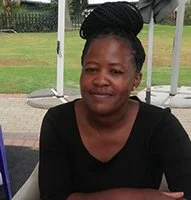
Khayelihle Benghu
Orbit Decay
Khayelihle Benghu resides in Johannesburg, South Africa. She has been writing since 2008, and besides writing, she has a passion for photography, mainly nature. -
P. W. Covington
Guardian Angels (The Beaches of Venus)
PW Covington is the National Beat Poetry Foundation's current New Mexico Beat Poet Laureate (2024-2026). -
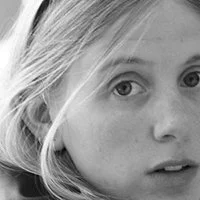
Ziggy Edwards
Mudbubble/Rockmachine
Ziggy Edwards lives in Pittsburgh and edits the online zine Uppagus. Ziggy's own poems and short stories have appeared in publications such as 5 AM, Dreams & Nightmares, Grasslimb, and Strange Horizons. Pittsburgh Poetry Exchange published her first chapbook, Hope's White Shoes, in 2006. -
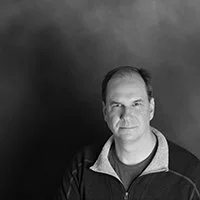
Darius Jones
Starling
Darius Jones’s stories and poems have appeared in Strange Horizons, The No Sleep Podcast, Space and Time Magazine, and Star*Line Magazine. The Books of Hours, a collection of Dark Cosmic poems, was published in 2025 and is a finalist for the Imadjinn Awards.
He lives in Alexandria, Virginia. -
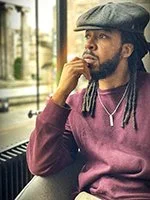
Russell Nichols
Decaying Orbit
Russell Nichols is a speculative fiction writer and endangered journalist. Raised in Richmond, California, he got rid of all his stuff in 2011 to live out of a backpack with his wife, vagabonding around the world ever since. Look for him at russellnichols.com.
-

Matthew G. Spence
The Listening Ones
Matthew Spence was born in Cleveland, Ohio. His work has most recently appeared in Candlelit Chronicles.
-
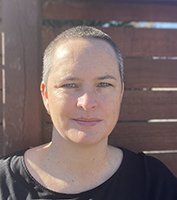
Sherre Vernon
When They Land
Sherre Vernon is the award-winning author of Green Ink Wings, The Name is Perilous, Flame Nebula, Bright Nova and Translating Blue. Sherre has been nominated for Best of the Net and Pushcart prizes, and anthologized in several collections including Fat & Queer and Best Small Fictions.