
Logic has no place in this most human of emotions.
Click the plus sign to read the full text.
-
I learned young that hunger doesn't wait
for permission.Ravens do not blush over what feeds them.
They glide into the field where something has already given way—
fur slicked flat by rain,
the opened seam of a ribcage,
the soft fact of something that used to be able to run.They do not ask how it got there.
They lower their heads
and enter.I have loved like that.
You were already split down the middle when I discovered you—
voice worn thin at the edges,
your laugh still wet with someone else's name.I tilted my head,
chirped when you offered me the glitter-worn trinket of yourself.Hunger is not delicate.
It is a shine along the throat.
It is the soft sound of entry.Ravens collect what glints.
Foil, bones, shard, a button,
the way you press your tongue to your canines when you're thinking,
the way you held a cigarette like it was thinking for you.I tried on your posture like a coat still warm from your body.
I needed to know—did I want your mouth
or did I want to be it?There is a point where mimicry stops being performance
and becomes muscle.
Where the voice you've rehearsed slicks your own vocal cords
until it is the only way you know
how to speak.I do not circle politely.
I descend
upon this meadow of silk and you,
you, you.Here the air tastes like pennies,
iron and heat and sharp
like your nails digging into my back,
like your fingers tugging at the roots of my hair.Feathers damp with your gutter-water,
black gone green in the right light,
I enter the bright cavity
plunder something small and twinkling and call it love.If I want your mouth it is because I want to feel how it moves from the inside.
If I want to be you it is only because I know how to take.The raven cannot decide between devotion and dissolution.
I do not love halfway.I orbit. I glean. I devour.
I open my beak
and your name falls out. -
Let's play a game of who can be quietest (you win).
Blindly koi-dancing centimeters apart without a clue
I'm not touching you. The fire of a million suns in our
coeur and it's a different planet down here, weightless
hovering above whalesong-haunted urchin barrens but
I can't point out to you all the sunken treasures
of bioluminescent stars
because the people
up where
the people
are insist that
we're in hate.
All the legion little voices within me under noise discipline,
keeping my secrets, couple quietly in hot drawn-curtain
bunks to stifle their moans, sweaty as peach slices canned
in their own syrup. How like sea snails slipping from their
shells we'll slither across each other's tongues and worship
at the pillars of temples drowned below the waves.How flat is the surface world compared to our deepness. I'm
following you
off the edge
of the map
to sail across a sea of comets and cold fields
of sunflower starfish. We're self-contained and -sufficient
vulnerable
only to rust
and lust.
Sounding you out, reaching crush depth. Saturn is lighter than
the liquid in which our organs swim. Contact!
Buoyant heart surfaces
past my lips.
Come up for air.
Salt spray, nautical knot, able-bodied and Hello, sailor
Let's play another game: what's hard long and full of (you win!) -
Every morning at six-fifteen William gets out of bed and leaves the bedroom door open. Today, he walks down the tiled hall hung with dusty family photos, passes them without looking up from his varicosed feet, and sits down at the 1931 Steinway Concert Grand Piano in the open-plan kitchen. An L-shaped bench with a fridge caps off one end, and a round dining table sits behind the piano, bronze pipes zagging up from the kettle and down to a glass coffee pot waiting in the centre.
It would only be an oddity in someone else’s house. Here, it’s something they built after they got married, a piece of adventurous art, like Mary’s hand-sculpted mugs with their ugly faces and ear-shaped handles sitting empty on the windowsill.
The house is mouse-quiet.
The first time he sat alone at the piano, the keys told a shocked William that they would miss her touch. Was he going mad? He stared as they told him how Mary had a way with them—knew how to press them just so and make the perfect cup of coffee in the early mornings, the kind that made the steam curl fine as lace, and knew which keys ran slightly flat and bitter or not quite right. The song could be played alone but they would always play it together, and sit out under the ivy-strung pergola where they never ran out of everythings and nothings to talk about. William missed her, so he listened but did not play.
The keys wait in the morning silence, so heavy they might all have played at once if it really weighed something. William’s breathing wheezes into it, in and out. He is as old as the polished tiger mahogany of the piano, his wrinkles reflected in the striped wood where he swears he sees her sitting beside him.
He reaches out but stops short of touching it, like her image is water and disturbing it might erase her completely. It’s stupid, he knows. But he’s been so long with her and so short without her that there’s hardly any way to see the world without her in it. Eventually, his hand falls to press his knot-jointed fingers into the closest F-sharp. A drop of hot water falls into the coffee grounds.
But he can’t do more than this. He can’t make himself play the next note, because it was her note, her hands, her song, that would make the coffee. He keeps playing F-sharp over and over so her absence is filled with real noise, not the noises he hears when he’s alone too long.
The far cry of sirens, warbling as they stopped right in front of the house, the patter of slippers as the neighbours worried in from down the street—siren song so different to what they’d usually hear so early in the morning. The hurried steps of the doctors and the rattle of her bed and the beeping of machines as they raced her inside too fast for him to keep up.
The keys take it upon themselves to speak of moments rich in sounds that weren’t themselves. The day Mary went into labour while he was at work and how she swore black and blue that he better be there, better be there or so help her god; The day he brought her home after having her wisdom teeth extracted and she could only say random assortments of vowels.
William slips into a C-sharp, his fingers almost feather-light across the pine-spruce keys. Each of them was individually weighed when this piano was made, but he cannot bring himself to do the same with his hands, instead asking them to go on with the most hesitant of touches. The hot water drips with each press.
Like their three children who’d stuck to his side at her funeral, each key insists on sharing their memories of the family dancing in the living room, their children’s joyous screaming when they got their university offers, the baby showers and the birthday parties and the cosy autumn rains that kept them all indoors. He wonders if the piano ever spoke to her, if she heard his I love you before she passed, and if she’s listening now, wherever she is.
He adds a G-sharp minor, playing the F-sharp and C-sharp before it, three plangent chords that make hot water fall steadily into the coffee now, coffee rising and blooming in the filter. The smell of it only hints in the air, so faint it’s still a question being asked by Mary’s ugly mugs, their mouths open and ear-shaped handles turned toward him.
Outside, the neighbours wake to a familiar song.
-
Starts with a craved kiss
Ignoring the spread of rot
Mould easy to missThroat infiltrated
Spores leave alveolar stain
Where breaths locatedVocal cords are bound
Fungal rubber bands in knots
Cannot make a soundSly filaments rip
Burrow into tissued brain
Thoughts change ownershipSame face, psychic con
Old self spent but new liege not
Life siphoned is goneName left like a ghost
Extractive greed, inhumane
Seduces next host -
I put a lock of my hair
under a microscope.Inside, I saw a forest of trees
with scaly barktrunks made of protein chains
begging to be fed.A woman emerged
from the shadewith a basket in front of her
like an offering.Inside the basket I saw the
head of a sowwith teeth removed
so she wouldn’t bite,and through the skull
galaxies of nerve cells,folded and fissured
like a human brainwith immature synapses
in the visual cortexof a pig forced to live
in the dark.I saw a lake filled with juices
of adrenaline squealingthe surface skimmed by human
hearts made of wasp nestscarefully constructed like
a gated communityand inside a paper chamber
I saw me.
Meet our contributors
-
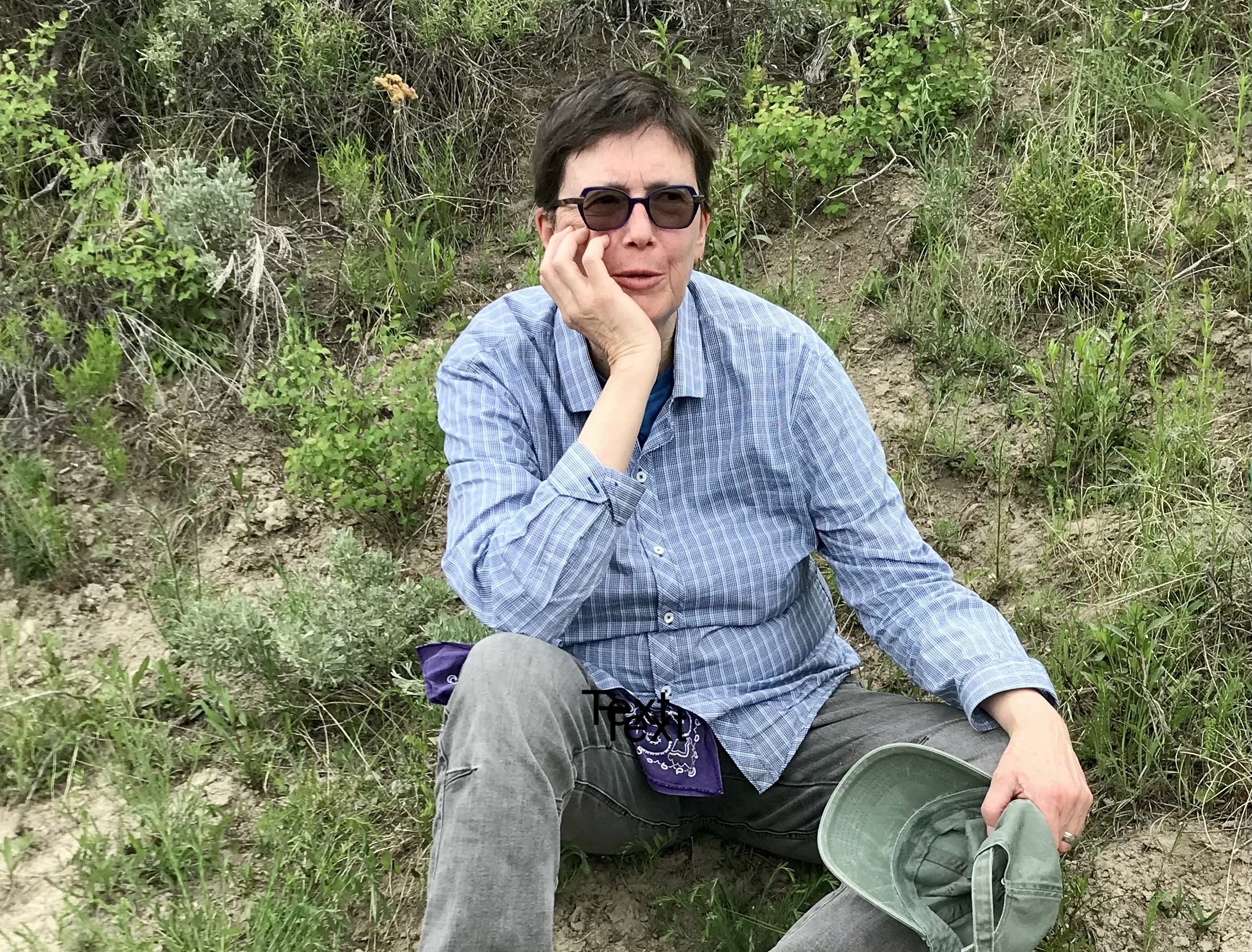
Andrea Halliday
Predator
The sharing of a family secret shocked Andrea into poetry. What began as a way to process this revelation is now a passion. As a surgeon trained to compartmentalize infusing her poems with feeling is a journey. She is grateful for the kind guidance of Mark Doty and Carter McKenzie. -

Ella T. Holmes
Coffee Maker Piano
Ella T. Holmes doesn’t write to escape the world, she pokes holes in the one we've got and asks why we can't do better. Ella maintains corporeal existence by patting cats, writing, and engaging in Disability Justice advocacy. -
Isabella Nesheiwat
raven-ous
Isabella Nesheiwat (she/they) is a fiction and poetry writer based in Southern California. She reimagines Greek mythology and writes about heartbreak, identity, and the strange work of being human. Her debut book, Turning & Turning, was self-published in December 2025. Ancient problems, modern teeth. -
Josh Pearce
Cold War Submarines
Josh Pearce has published more than 200 stories, reviews, and poems in a wide variety of magazines, including Analog, Asimov’s, Beneath Ceaseless Skies, Bourbon Penn, Cast of Wonders, Clarkesworld, Diabolical Plots, Kaleidotrope, Locus, Strange Horizons, On Spec, Weird Horror, and elsewhere. Find more of his writing at fictionaljosh.com. -

Ayida Shonibar
Assimilation Cycle
Ayida Shonibar (she/they) writes dark and wistful speculative fiction about misfits, monsters, mischief-makers. Spanning genres and age categories, their short stories, essays, and poetry appear in various publications. They are a Lambda Literary Fellow and an Otherwise Fellow. You can find more information at ayidashonibar.com.