
Um….did you hear that? Yeah. Neither did we. And even if we did, it’s probably nothing.
Click the plus sign to read the full text.
-
Miss Elmwood,
We regret to inform you that we are caught in a dream, and need your help to escape! Only you can help us wake up! If you are able to assist us in this matter, please give a small donation to the Waking World Organization. We would be most grateful. Plus, you will get a free coupon on your next trip to Lidl. Everyone loves Lidl! If you have any questions, call the Waking World Organization at +1 (879) 145-8990
Thank you and have a good day,
Team Victory***
Miss Elmwood,
Thank you for your donation. We are most grateful. You alone saved us from being stuck in that wretched nightmare. Now, please, if you are able, we would request that you make another donation. We are trapped in the outer reaches of space, caught in what those in our field of work call a Dead Zone. Please, if you are able, call the Star Walker Foundation at +44 (0) 587-4117. Please, this is a matter of utmost importance. We don’t know how much longer we can keep the Zarg back with our laser pistols.
Thank you and have a good day,
Team Victory***
Miss Elmwood,
Once again, we regret to inform you that we are trapped in the Upper Room Dimension. We don’t even know how we got here this time. But, thankfully, through luck and the grace of the Almighty, we have managed to survive this perilous realm of nightmares and horrors. Indeed, Miss Elmwood, we have slain dragons as big as skyscrapers and boxed with horrors that can make the strongest man look like a toddler. We are most happy in our accomplishments, but we again request your help. Send your donation to the Extraordinary Containment Organization, and we will be out of here before you can say finish your next sneeze. The number is +1 (209) 888-888
Thank you, madam. It was a pleasure talking to you.
Team Victory
***
Miss Elmwood,
We would like to offer you a spot on Team Victory. We see that you are struggling to pay off your debts and have recently been fired from Chug’s Burgers. In all honesty, I thought that place was gross. Found a cockroach in the toilet once, never going back. My husband even got sick there. Anyway, I’ll send over the links and files later today and tell us what you think. Based on your profile, you went to North Ioda Seminary School and have a Master's in Mathematics, you would be a great addition to our little team here. We hope you accept.
Thank you, and have a good day. Can’t wait to hear your decision,
Team Victory.
***
Anabelle Elmwood,
Thank you for joining Team Victory. Based on what Patricia said about your interest, we know that you will make an excellent member. Once you arrive at headquarters, we will handle wiping all your debts and get you ready for a permanent position on the Team. It’ll take a bit of training, but we all believe you will excel and become a wonderful addition to our little family.
From,
Team Victory Leader Kwame. -
Where’s Jonny? Push over, bud, let me rest, I’ll tell ya. Oh, I’ll tell ya. Pass me that bottle of I don’t care what. Christ, but my heart won’t stop racing. What was that!? Ah, nothing.
So me and friggin’ Jonny, we’re heading out to peek through some places, maybe look into a few cars – he’s got his nice crowbar – and we’re cutting through to Wellesley like usual. Walking through the cemetery, sharing an Old E, and Jonny can’t even enjoy his drinks. He’s bitching about the fog, eating grape popsicles in the middle of February, for the love of Christ, complaining about the cold.
We’re walking through the cemetery and out of nowhere comes this tottering brick building we don’t remember. That’s weird, right? But there it is, crumbling, falling down. Crazy old skull padlock on the door. Big as my head, no lie. Full head of antlers to boot.
Let me get another drink bud? Thank you, thank you.
I wanna be off, because, again, weird shit, but Jonny loves his crowbar. He’s jamming away at the skull lock, pops it easy, stone teeth go rattling away down the stairs.
Maybe there’s something here, he says.
Maybe there’s trouble, I say. Yeah.
Inside the building it smells like Bellwoods, you know, the washroom where that Vancouver goof used to wash his clothes before they got him in the last sweep? Edge of Trinity Bellwoods. Where the water’s never working? Yeah, but more dead-like. Mouldy. Not a sleeping place, that’s for sure.
Anyway, crowding the room is a box, a coffin, I guess, with carvings of creepy skeletons dancing in my flashlight beam, swirling and swaying all crazy. And a bigger one in the middle, with horns like a crown, jerking his bony hands, making ‘em all dance. Like it was some kind of performance, a terrible show. Made my eyes hurt to look at, so I turned away.
A scraping sound, and of course Jonny’s started on THAT lock, too.
Did you hear something!? Aw man, let me get one more sip of that. I’ll owe ya. I’ll owe ya huge, if – if. Tomorrow, for sure.
I tried to warn friggin’ Jonny, I swear I did.
There’s a clicking, a snapping. The crowbar clatters away, and these long white fingers come out. This skeleton hand’s got him by the throat. Jonny’s eyes are bugging, staring back at me.
Then this THING rises out of the box. I don’t know what else to call it, man. A thing like a dead giant. Shining bone antlers. Even in the dark, it had these eyes, these holes. Opens its jagged horrible teeth, and in a wasp-sting voice it says: one at a time.
This thing’s holding Jonny like one of his popsicles, dancing him up and down, and his bones are twisting, turning all wrong, cracking in the dark. He’s begging, crying – what can I do? I say, you’re welcome, you’re welcome, please enjoy, please, please please. My God, what else could I do?
So it lifts Jonny up, mouth wider and wider, sharper and sharper, and all I can do is turn and rip back through St. James, back here to the tents. I never sprinted so fast in my life, bud. So you can see why I need just one more drink.
But Jonny's screams … oh man.
Wait, did you hear that? Is something coming!?
Oh Christ, bud, run!
-
I'm first to the funeral, having a nice
lay me down as I wait. I never knew how
to knot a tie as neatly as this. I never
dressed left before, never shaved so closely,
the cowlick in my hair has never been so tamed.I would prefer the lights turned down—
even with my eyes glued shut I can see
shadows lining up now like I was an ATM,
although those days are gone. I'm neither hot
nor cold for once but I can feel a draft from
the lips of the ones who lean over and whisper
secrets in my ear which holds a wax plug
lest I should leak.I can't smell the bouquets, but I presume they're
surrounding me, all those flowers cut down
in their prime. I guess murder is one way to mourn.Nothing of the music reaches down here
in the walnut except the beat and that all in
common time. I would take a deep breath back then
to show my boredom. Today, I have infinite patience.The words spoken over me this afternoon
are just church mumbles, nothing new here—
in fact, nothing new anywhere, not now.
Now, nothing new forever. That spider sleeping under
my lapel, do you suppose he knows what's coming?He's bound to get so hungry.
-
The song begins when the grieving family leaves. When their warm, pink, fleshy bodies disperse, black dresses and suits and lacy veils disappearing into the distant shadows down the headstone-lined road, the great mausoleum doors grind closed and
click - click - click - click - click - click
the tempo begins.
Hundreds of tiny feet—rats and roaches and pill bugs and millipedes—skitter in familiar rhythm as they come to explore the new resident. The performance will last as long as it needs to: sometimes weeks, sometimes months, sometimes even longer; depending on rain, sun, snow; depending on the quality of the casket, on the quality of the seal on the crypt. Always, though, they find their way in, and when they finally do then others are guaranteed to follow, and for the first while the tempo of their movement will be upbeat.
When it begins the bassist wakes first. Her cello is shaped from the wood of her own coffin, its catgut strings perfectly moist, her bow strung with strands of hair from every resident in their shared home. She plucks and weaves and creates a sound that compliments the fluttering of the bat wings outside against the darkening sky.
click - click - click - click - click
Eventually the drummer will add his talents, beating on the heavy granite slabs that surround them all with carefully selected found femurs, which make for excellent drumsticks. The flutist joins now, too, finding every crack and hole in the limestone that seals the granite, encouraging the wind through, helping it whistle in pitches and moans.
click - click - click - click
Even as the tempo slows, the xylophonist joins to keep up the energy, opting to use their own body as their instrument, bony fingers perfect for tip-tapping away at exposed ribs.
click - click - click
The singers add their voices last and even though they are all so different, so unique—timid, husky, shrill, honeyed—they harmonize perfectly. Their words, if there are any, are meaningless, and yet carry the story of every single soul that has ever found home within. Even the ones who have turned to dust; even the ones who haven’t arrived, yet.
And so, at last, the band is ready. Their music flows as easily as the sounds of nature itself: like wind through willows, like waves against shoreline, like crashes of thunder, like the rustle of leaves
click - click
patiently waiting for the ones who dance. And timidly, one by one or two by two, they make their appearance—these are the most recent members, those who are still gaining their courage. Not ready yet to join the band but ready to listen. They hold each other, and spin, and laugh, and cry, and feel more at home with every new soul.
And when the clicking of all the little feet finally stops, when the last little pill bug disperses and goes back to its cozy home in the rotting leaves outside, it is time, once again, for the song to end. The players lay down their instruments and welcome the newest member of their troupe, and they all rest, and wait for the next one.
-
You won’t find it on any map, or lease, or line of time. The apartment exists between seconds- wedged like a sigh between one heartbeat and the next. I found it when the clocks in my kitchen stuttered, and the second hand forgot how to move.
That was the week everything slowed. The radiator stopped hissing mid-breath. The coffee steam hovered, uncommitted. Even my voice sounded pixelated, as if I were buffering through grief. I’d just ended a long almost-love, the kind where you never quite get to be held in daylight. I wanted silence. Instead, I found the apartment.
It appeared on a Thursday. The air bent, and there it was- half real, half reflection. The door was always open, like it had been waiting for me. Inside: walls painted the color of hesitation. A window that faced nowhere. Dust that seemed to breathe.
At first, I thought it was empty. But then I saw them- objects scattered like loose memories: a key that unlocked nothing, a cracked teacup whispering steam, a photo of a girl mid-laugh with no face left to remember. Everything here was unfinished, like someone pressed pause halfway through their life.
The apartment crooned quietly. The busy-ness wasn’t mechanical; it was human. A low, continuous murmur, like the squeak you make when trying not to cry. I followed it to a mirror leaning against the wall. My reflection blinked a half-second too late.
“Welcome,” it said, lips barely moving.
I should have run.
Instead, I stayed.
Each room carried a different kind of time. The kitchen looped endlessly at 10:27 a.m.- a sunbeam eternally caught on a chipped glass. The hallway expanded if I held my breath. And the bedroom… the bedroom dreamed without me.
I began to live there. Or rather, in the space between living. I didn’t eat, didn’t sleep. I simply existed, collecting the remnants left behind by other visitors. A child’s shoelace. A lipstick print on a napkin. The word sorry carved into a wooden drawer.
One night, I found a journal on the floor. Its pages glimmered like film. Each entry began the same way: If you’re reading this, you’re not supposed to be here.
The handwriting was my own.
The apartment, it turned out, wasn’t a refuge. It was a receiver- a place where all the unspoken words went when people hesitated too long. Every almost-confession. Every text deleted mid-typing. Every apology swallowed in the name of peace. The walls were made of silence that never found a listener.
I listened. I couldn’t stop.
The air still buzzed with pieces of regrets:
I wish I’d called you back.
It wasn’t your fault.
I miss the faces you made when you strummed your guitar.
I should have stayed and kissed you more instead of caring about our friendship, now we are strangers.
The voices had no faces, only tones. Some trembled. Some sang. One, barely audible, whispered my name. When I spoke, the apartment answered in echoes, rearranging my words until they meant something else. “I’m lonely,” I said once, and the ceiling replied, “I’m learning.”
Days, weeks, maybe years- time had no opinion here. I wrote letters on the walls with condensation, and they evaporated before I finished the last line. The floorboards sighed whenever I stood still too long. I began to forget my own name, until one day, the mirror asked me for it.
“I don’t remember,” I said.
“That’s how you know you’re home,” it replied.
Outside the window, seconds stacked like dominoes, waiting for permission to fall. I understood then- the apartment wasn’t between seconds; it was the space created by everything unsaid. It was where hesitation lived.
I wanted to leave. I tried. But the door only led to other versions of the same room.
Until one morning, I heard it- the sound of someone knocking. Not on the door, but on time itself. A rhythm. A heartbeat. A reminder.
I followed it to the threshold. There, on the other side of the second, was an orb of celestial blues. And joy- the type that makes you cry in silence. And the smell of rain on grass. I could almost remember how to belong to a world that kept moving farther and farther away from my youth, my dreams and hopes.
I took a breath. It was musical like a clock restarting.
And when I stepped through, the apartment folded back into air, like it had never been there at all.
Still- sometimes, when my phone glitches, or my thoughts lag mid-sentence, I hear it drone.
A low buzz between seconds,
asking softly,
if I still remember
how to wait.
-
I was born in a city of sinners,
the enemy captured my household,
as well as my friends and neighbours,
and carted us into the exile of small towns,
where we clung to the bark of a fig tree.
Shame is he who hangs on a tree, they said.
They threw stones and bricks at me
and at the members of my household;
they opened their tobacco-filled mouths,
their clattered teeth snarled and snapped,
their hawk eyes popped out of their sockets.
They slapped and mocked me to my face,
flogged me by flogging themselves,
saying that they met their bloody gods,
who assured them of my hanging on a tree,
of my death through their clustered hands.
They dreamed I died clinging on a branch,
where they believed my God was murdered.
When they woke up, I clung to the tree,
smiling and staring at them, inviting them
to press a buzzer and celebrate with me.
They watched as golden florins swallowed me
in wild celebrations, frenzied joy, a hurrah.
They could not believe their eyes and ears;
when they saw me popping out of a shell
like a butterfly mutating from a pupa,
slants of raindrops in a siege from sky holes,
a tree growing from a bud, diamond from clay
a river rising from the sides of a pond,
rose springing in the sun from a debris.
With trepidation, they stepped forward,
to hear their gods whisper to my God,
how they moulded me from the moon,
and I was dead before they created me.
How could a man die a second time,
when an affliction arises only but once? -
He wore Harris tweed in the Hebrides. He washed the blood off his fists in the salt of the Hebrides. He cried as the waves crashed into the rocks of the Hebrides. A rock sat in pulp and mud near the heel of his boot in the Hebrides. His boot of salt-soaked, supple sheepskin stood in the muddy pulp of the shore of the Hebrides. The man whose head is caved in laps at the sea of the Hebrides.
He stood, crying, facing the sea. Gulping resolve, he rubbed his hands. His fingers aching from the sharp air and cold, angry sea. Under his nails hid bits of bone and brain. He stood, crying, facing the sea. He watched as the waves, laughing, mocking, toying with the body of the man with his head caved in. The waves sloshed the body of the man in milky pink foam, and crashed him into rocks before dragging him by his feet back out for another dance. The wind screamed against the rocks and ripped his cap away. He stood unmoved, and his long hair, wet with sweat and rain and salt stuck to his wind-battered face.
The rock first struck the man in the cheek and sliced it open. The man struggled back with blood in his mouth but the rock stuck again. Again, against his teeth so hard he cracked. The man spit bone and blood before the rock struck his throat and henceforth could only gurgle. As the man fell down onto the slick rocks he tore at his assailant’s wet jacket. The Harris tweed stank like a dog. His eyes were wide with fear and panic as he watched the rock come at him. The rock struck his skull and his eyes were wide but his life was gone.
He didn't know how many blows he delivered and when he remembered the next moment, he was rolling the body off the rocks. The hungry sea demanded and he obeyed. The salty lappings at his hands as he rolled the body to the mouth of horror made them anxious. If he were not careful, the sea would demand them too, and if he were not careful he would fall into the mouth of horror. The body rolled off the rocks and he slipped on the blood as the sea devoured the man before mockingly spitting him back at his blood and salt-soaked boots. He scrambled to his feet and watched the sea, sobbing.
He thought about leaping. Giving in and letting the sea bash his head against the rocks. Or letting the mouth of horror devour them, leaving his lungs full of salt. How would his bed feel on his face if he could live long enough to reach it? He couldn’t move forward, so instead he watched the sea. As he did, the body of the man with his head caved in began to disappear. Dragged under or carried elsewhere. All that remained was a herringbone scarf caught on a rock. He reached down and grabbed it before wrapping the wet wool around his neck.
He picked up the rock and threw into the angry waves of the Hebrides. He smiled and sobbed at the shore of the Hebrides. The blood washed away in the rain of the Hebrides. He picked his nails clean on the rocks of the Hebrides. He watched the sunset behind clouds off in the horizon from the Hebrides. He wore Harris tweed in the Hebrides.
-
Tom Barlow
In the Queue
Tom Barlow is an American writer of novels, short stories and poetry, whose work has appeared in journals including Hobart, Tenemos, Redivider, The New York Quarterly, The Modern Poetry Quarterly, and many more. See tombarlowauthor.com.
-
Kofi Akan Brown
Only You Can Help Us Wake Up
Kofi Akan Brown is a PhD Candidate at the University of Glasgow. He has been published by Freedom Fiction Journal and Hedone Books.
-
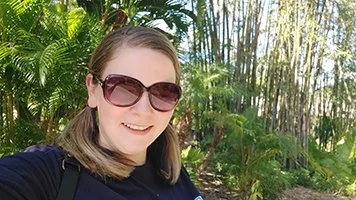
Sarah Chamberlain
Metronome
Sarah Chamberlain has had two short stories published and was recently the Second Place winner in the Toronto Star 2025 Short Story contest. She works at the library in her small town and spends her free time hanging out with rescue animals.
-
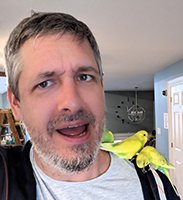
Chris Clemens
Catching Up Quickly
Chris Clemens lives and teaches in Toronto, surrounded by raccoons. Nominated for Best Microfiction, Best Small Fictions, and Best of the Net, his stories and poems appear in The Dribble Drabble Review, JAKE, The Woolf, Strange Horizons, Year’s Best Canadian Fantasy and Science Fiction, and elsewhere.
-
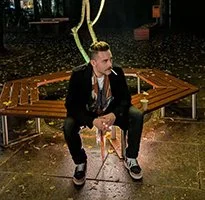
Tate A. Geborkoff
The Hebrides
Tate A. Geborkoff is a queer artist from Chicago. His poetry's appeared in Juked, Curbside Splendor, Doctor T.J. Eckleburg Review and Burningword. A nationally produced playwright, he has been selected as a semifinalist for the National Playwrights Conference. He currently writes the audio drama Psychopompos - a new mythology.
-
Jonathan Ukah
Come Celebrate With Me
Jonathan Ukah's poems have appeared in NDQ, The Pierian, Boomer Literary Magazine, Strange Horizons, Kingsman Quarterly and elsewhere. He won the Alexander Pope Poetry Award 2023 of The Pierian Literary Magazine. He was a finalist at the African Diaspora Award 2023 and has been twice nominated for the Pushcart Prize.
-

Joely Williams
The Apartment Between Seconds
Joely Williams is a Bronx-born poet and storyteller whose work drifts between memory, myth, and the machinery of modern life. Her poems explore digital ghosts, cultural echoes, and the tenderness of survival. She’s the author of Put the Phone Down, We Got a Job to Do and other works.